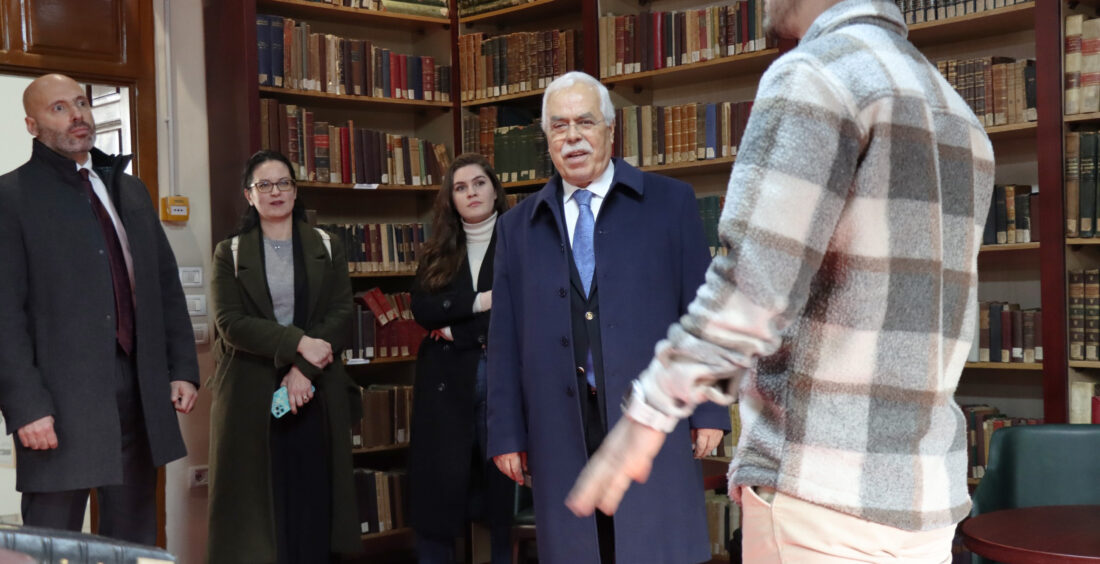
IETT, represented by Mrs. Anisa Hykaj, along with Prof. Dr. Halit Eren, former Director General of IRCICA, and Mr. Labib Nahhas, Executive Director of the “Sheikh Hamad” Award for International Translation and Understanding, paid a visit to the “Sotir Kolea” Center of the National Library of Albania (BKSH). During the visit, the Italian, French, and English sections, as well as the Oriental Hall, were explored and appreciated. Particular interest was shown in the rich collection of Persian, Ottoman, and Arabic manuscripts. Discussions...
The Bachelors’ Mosque represents a significant achievement in construction among the religious monuments in the city of Berat. The mosque is an important monument with numerous architectural values for the city, known for its distinctive “one-on-one” windows. It is located in the lower part of the Mangalem neighborhood, along the main road of Berat. The structure is built on two floors to accommodate the steep terrain. From the outside, the minaret appears short and rises from a prismatic plinth, with its lower...
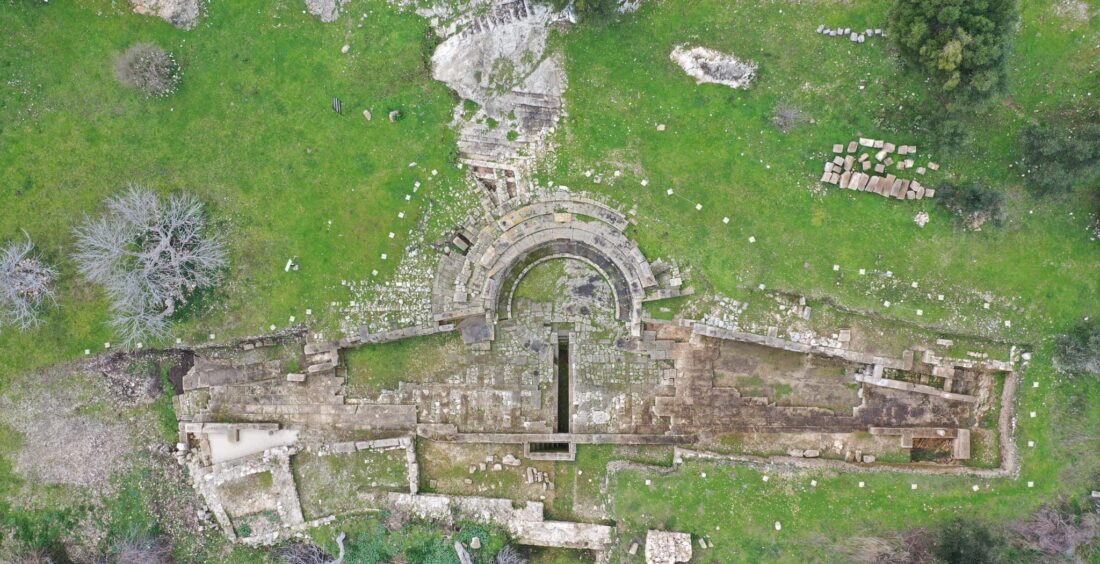
Very close to the city of Fier lies the Archaeological Park of Bylis, the largest city of Southern Illyria. The earliest document mentioning Bylis is the writing of the Greek geographer Pseudo-Scylax from 380 AD, in which it is said, “The people of the Land of Amantia, the people of Amantia who live here are Illyrians from the Bylliones”. The ancient city was built based on the architectural plan of Hippodamus. From the 3rd century BC, the city was equipped with numerous...
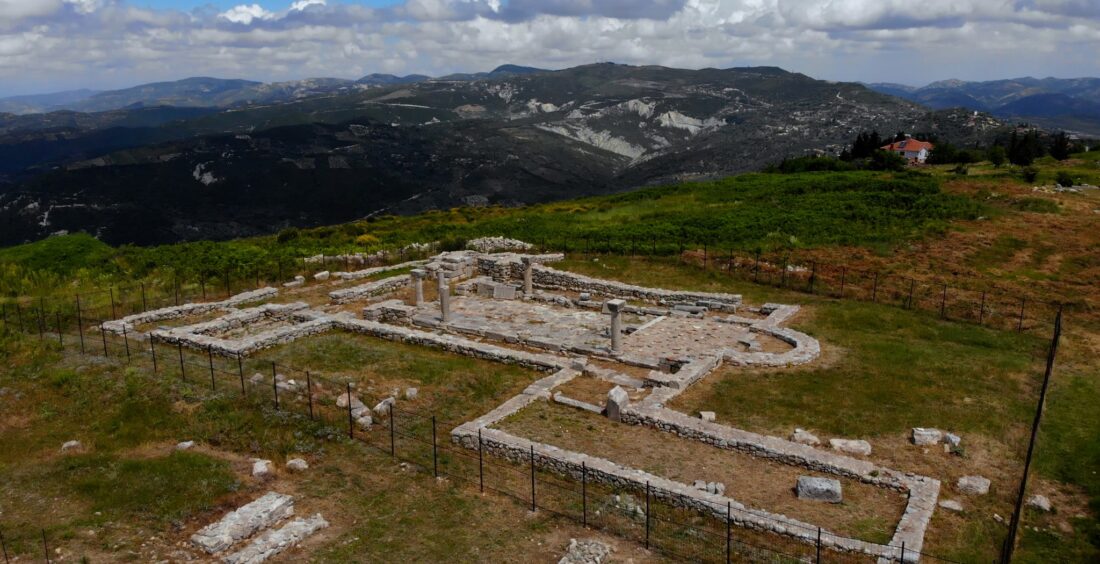
One of the most visited areas in Vlora, Orikum, is not only a seaside resort town but also an ancient Illyrian settlement, founded in the 6th century BCE in the lands of the Illyrian tribe of the Amants, on the hill known as Paleokastra. It was mentioned by ancient authors in the 5th century BCE as an important port of the Adriatic. Currently, only a small percentage of this ancient city has been discovered, but archaeological excavations are still ongoing. On the...
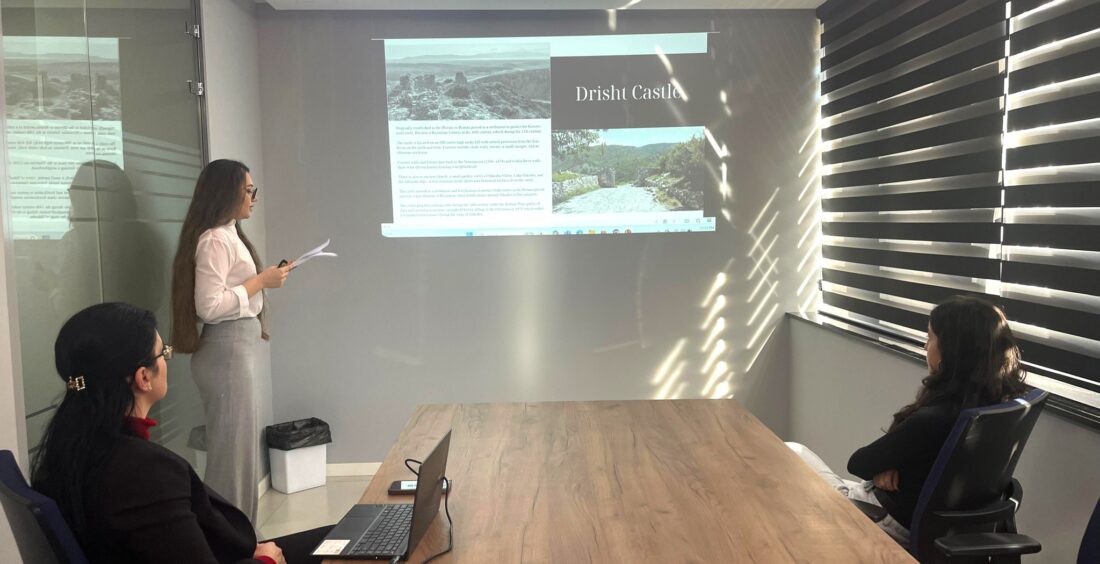
One of the priorities of the Institute of Education, Heritage, and Tourism (IETT) Albania is to train and prepare young people for the job market, supporting them in the development of their professional and academic competences. In this context, from October to December 2024, working practices were carried out at the Institute, specifically for the role of office assistant. Under the supervision of the IETT coordinator, participants gained knowledge in cultural heritage and tourism, along with qualifying experience that will...
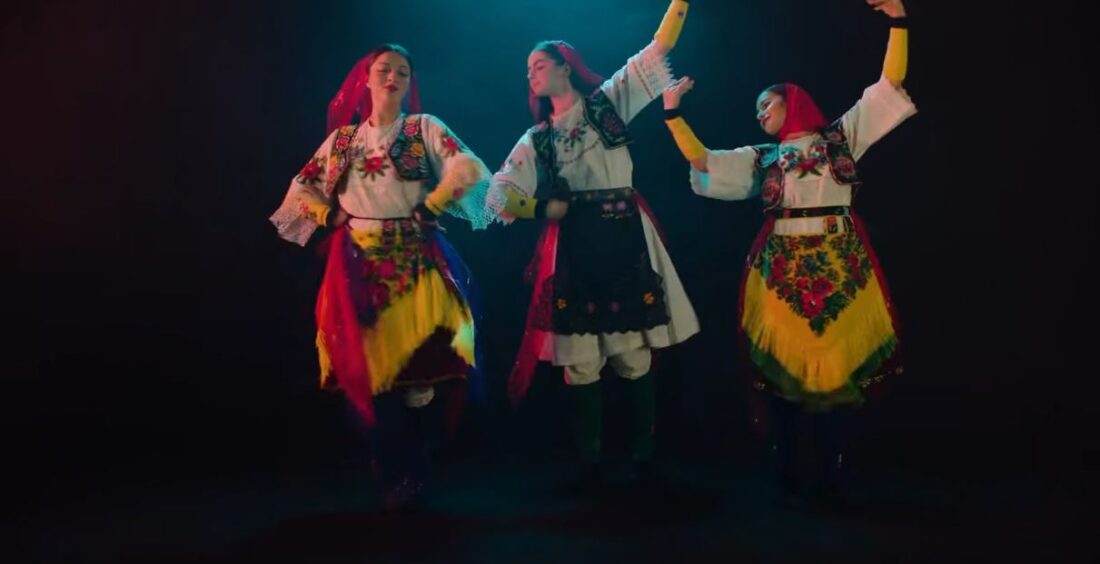
“K’cimi i Tropojës” is now part of the Representative List of Intangible Cultural Heritage of Humanity at UNESCO, becoming another symbol of pride for Albanian culture. This dance is characterized by energetic steps and fast rhythms, representing one of the pearls of our national heritage. For more than half a century, this dance has been an important part of the repertoire of Albanian folk ensembles, preserving and passing on the spirit of our tradition. Its registration in UNESCO not only strengthens Albanian...
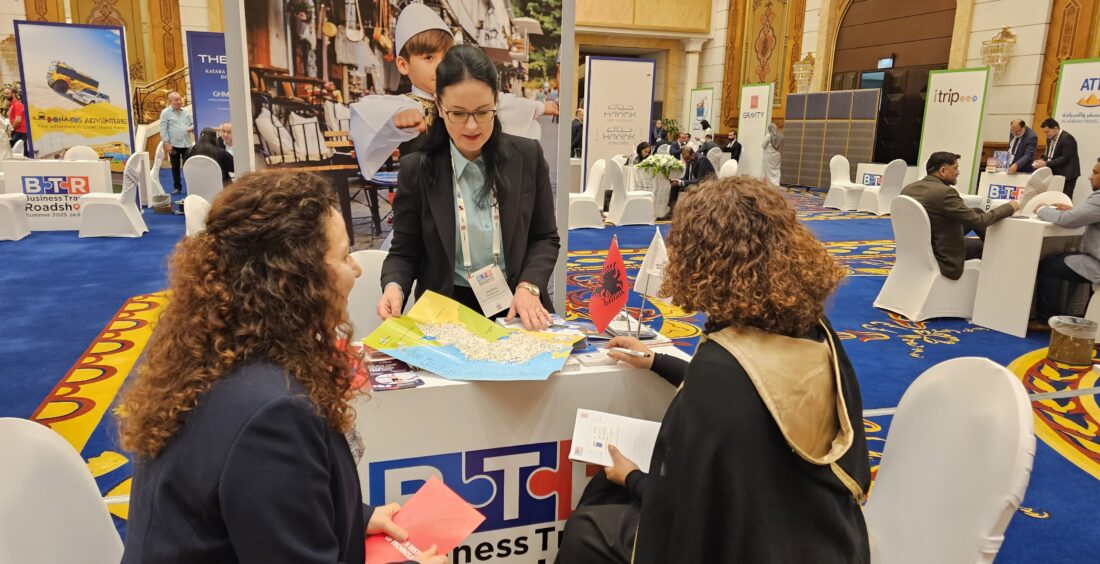
The Institute of Education, Heritage, and Tourism (IETT) Albania participated in the Business Travel Roadshow (BTR) 2025, held at the Hilton Jeddah on January 27-28, 2025! This prestigious event brought together over 100 agencies, institutions, and businesses from the heritage, tourism, and education sectors, providing an incredible platform for networking and collaboration. Attendees showed great interest in Albania as an emerging travel destination, known for its breathtaking landscapes, rich history, and warm hospitality. IETT took full advantage of this dynamic event, forging valuable...
Kaninë Castle, locally known as Kalaja e Kaninës, is located in the village of Kaninë, Vlorë County, Albania. Its origins date back to the 3rd century BCE, when it served as an ancient settlement of the Amantes tribe. In the 4th century CE, the Byzantines transformed it into a fortress town. The castle was reconstructed during the reign of Byzantine Emperor Justinian I, between 527 and 565 CE. It later became a stronghold for the Angevin Kingdom of Albania in...
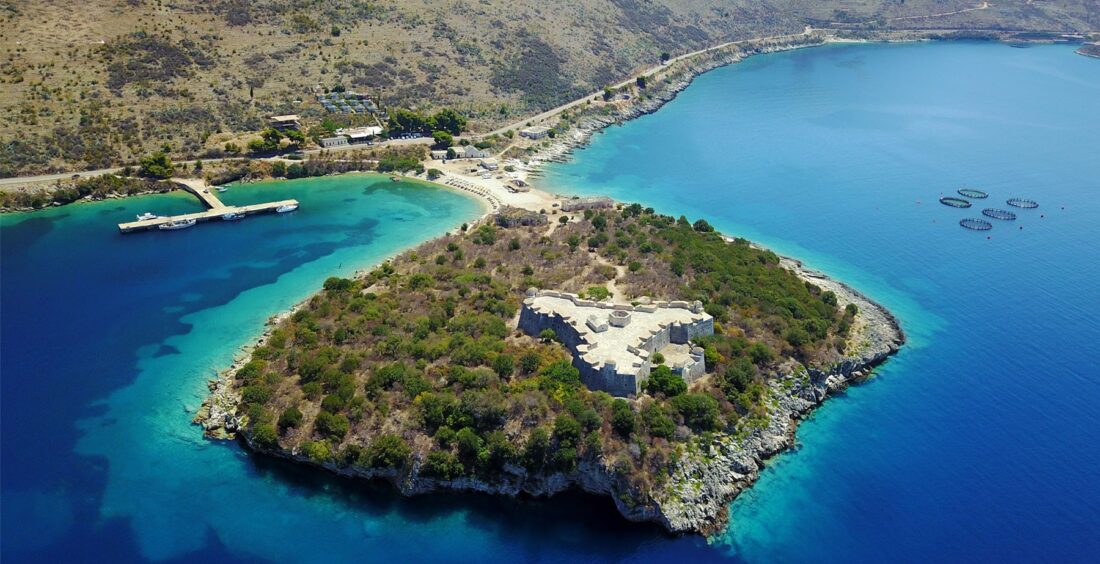
Porto Palermo Castle, located in Himarë, is believed to have been built in the 19th century by Ali Pasha of Tepelena, with assistance from French military engineers. However, historians debate its origins, suggesting it may have been constructed earlier by the Venetians due to its triangular shape, which resembles the Venetian Triangle Castle at Butrint. The castle is triangular in design, featuring three pentagonal towers at its corners, all constructed from limestone. Its thick walls, ranging from 3.2 to 3.5...
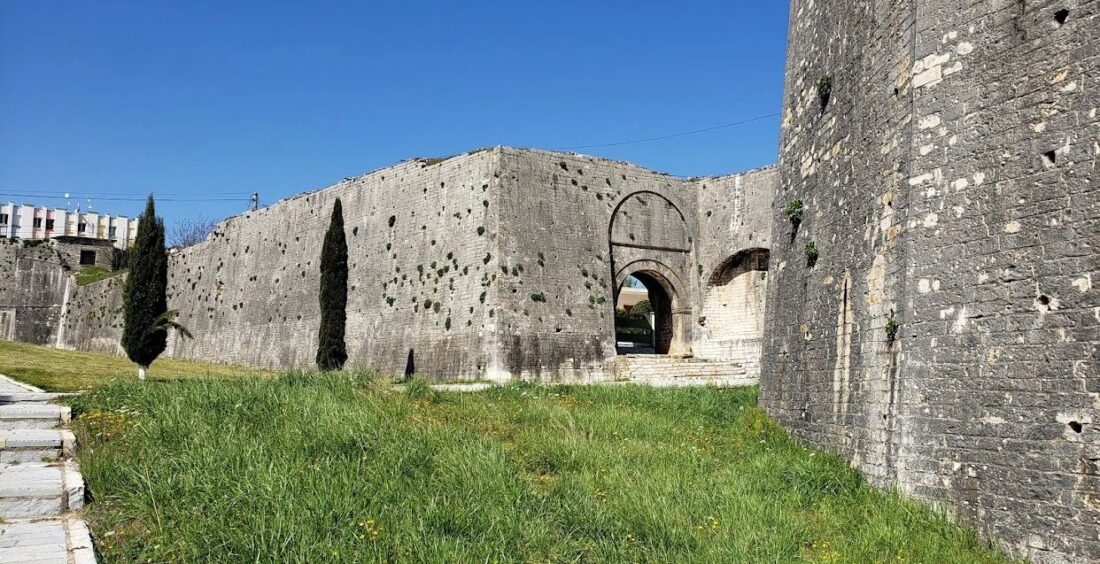
Tepelenë Castle, located in Gjirokastër County, Albania, has its origins in the Byzantine period, with its first defensive tower constructed in the 7th century. The site was mentioned in 1482 during a visit by Ottoman Sultan Bayezid II. Ali Pasha of Tepelenë, who was born in this town, rebuilt the castle in 1819, expanding it into its current form. The castle spans 4-5 hectares and features three entrances and three towers. Its walls were constructed to align with the natural...