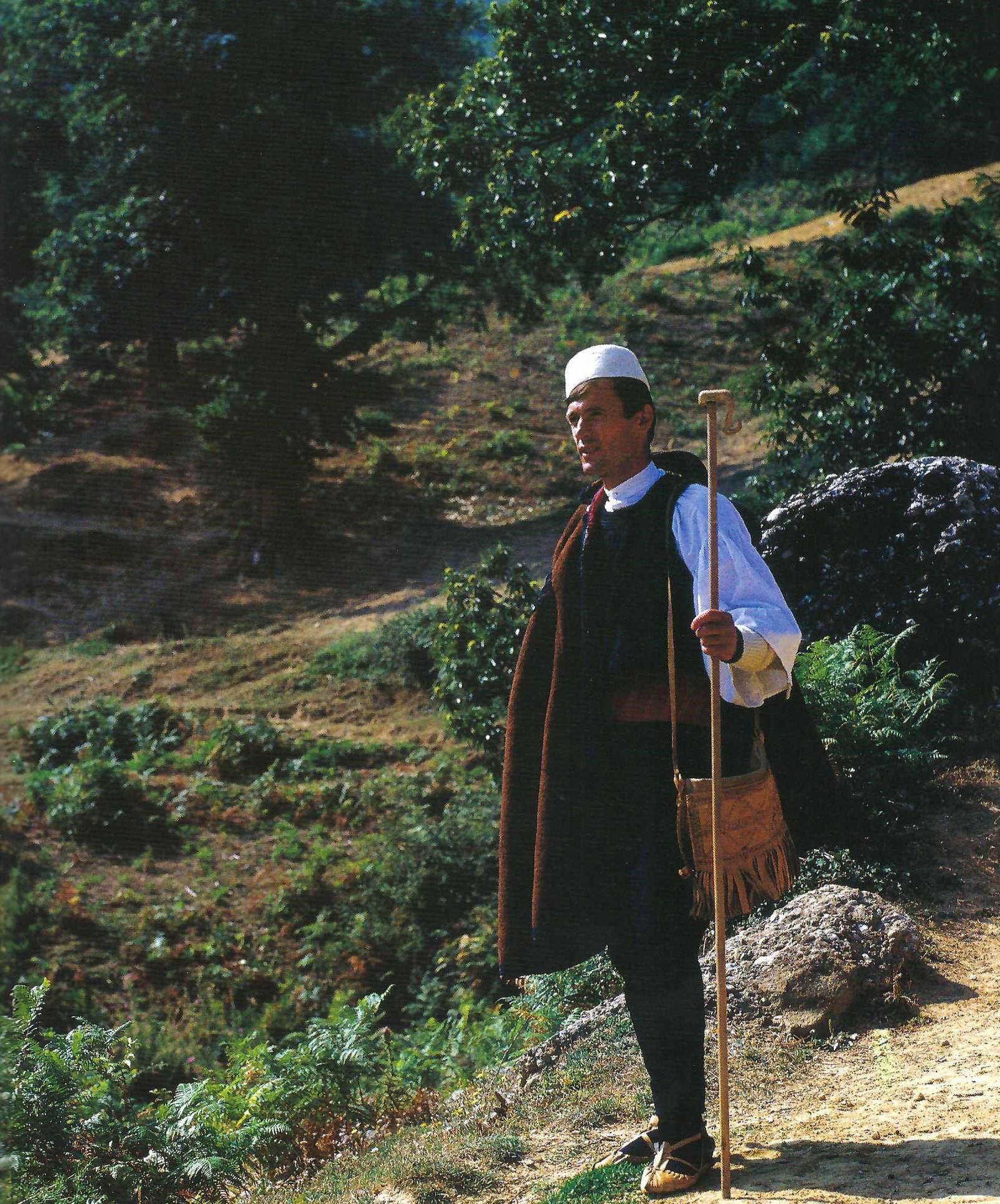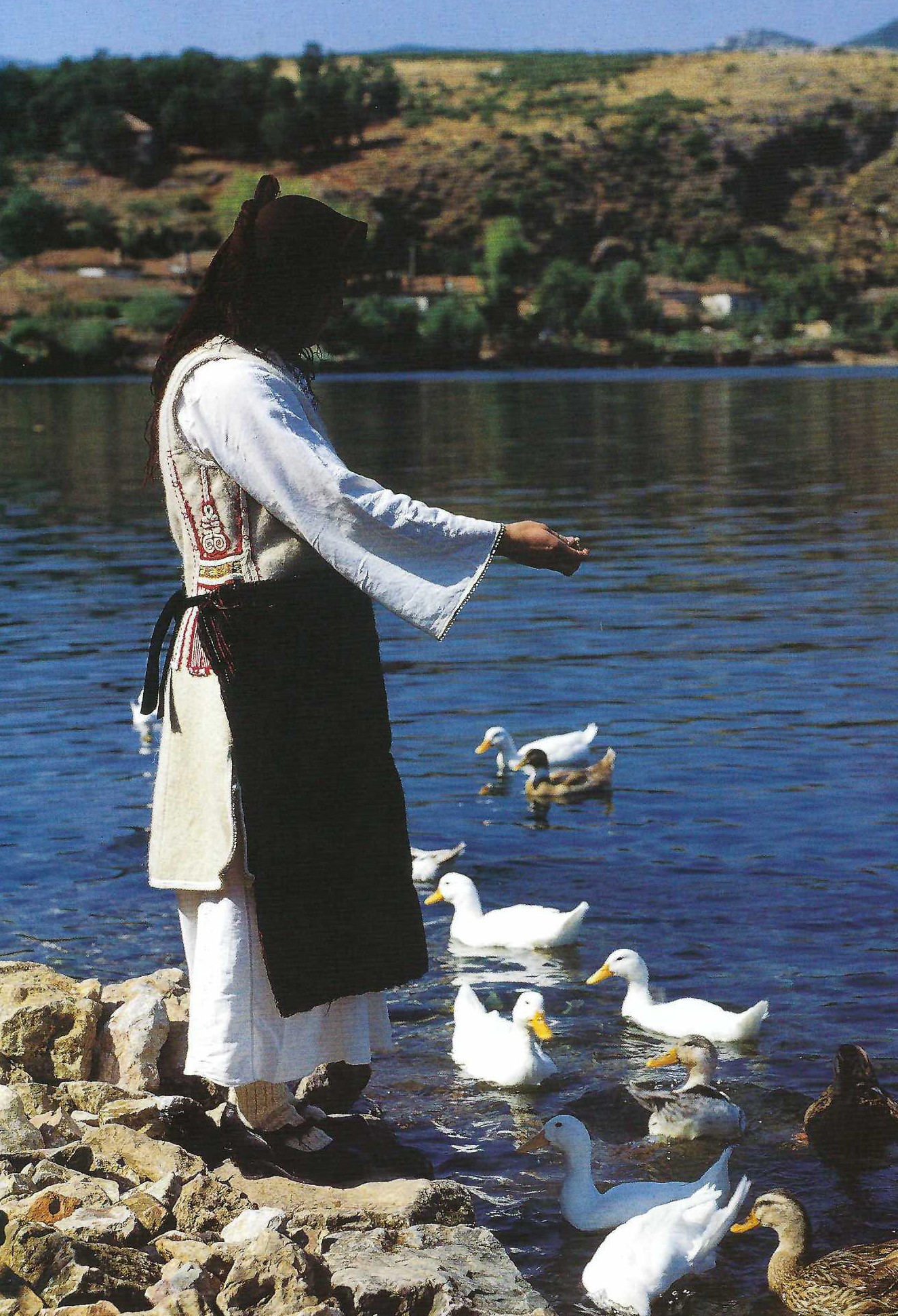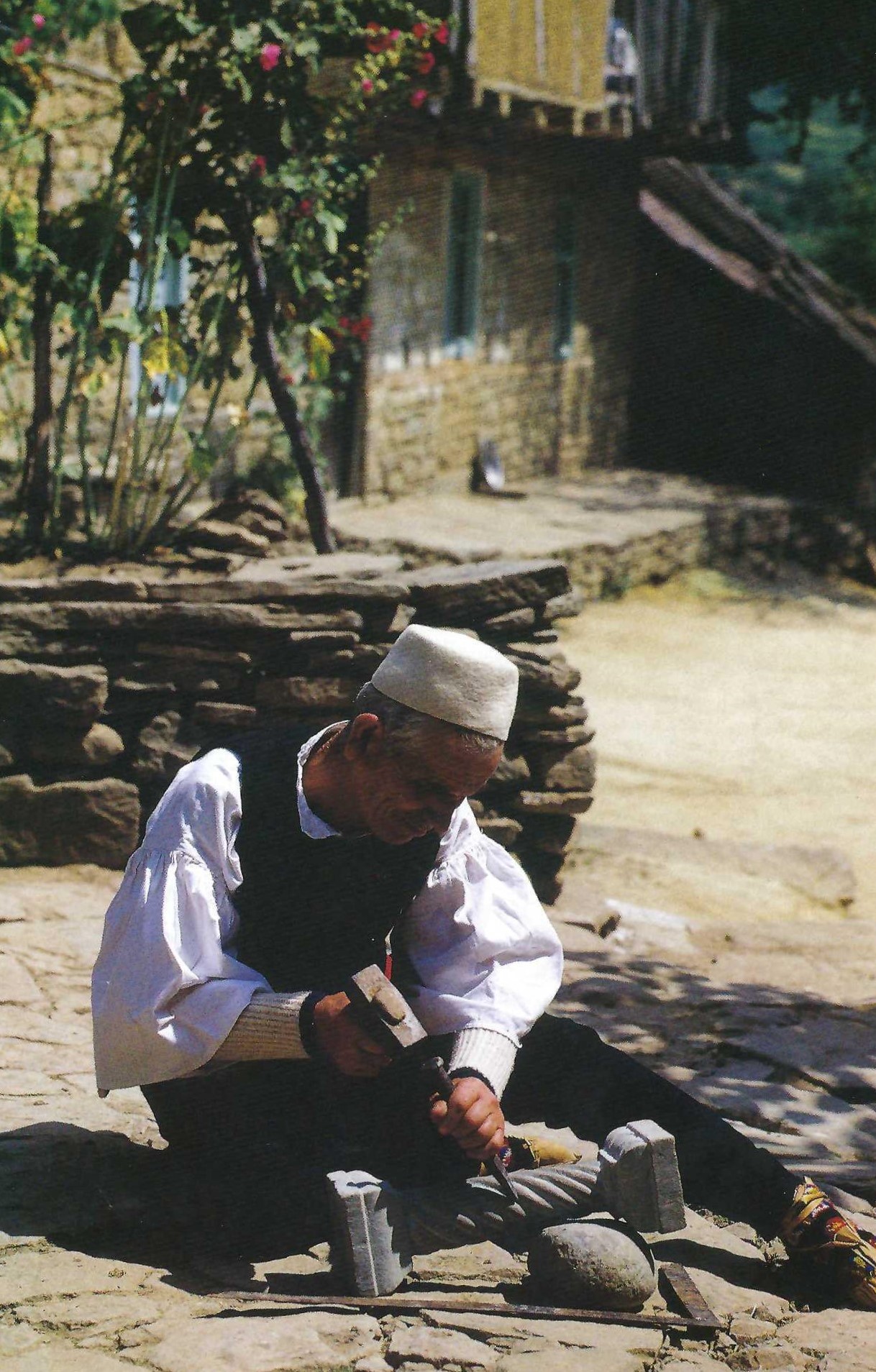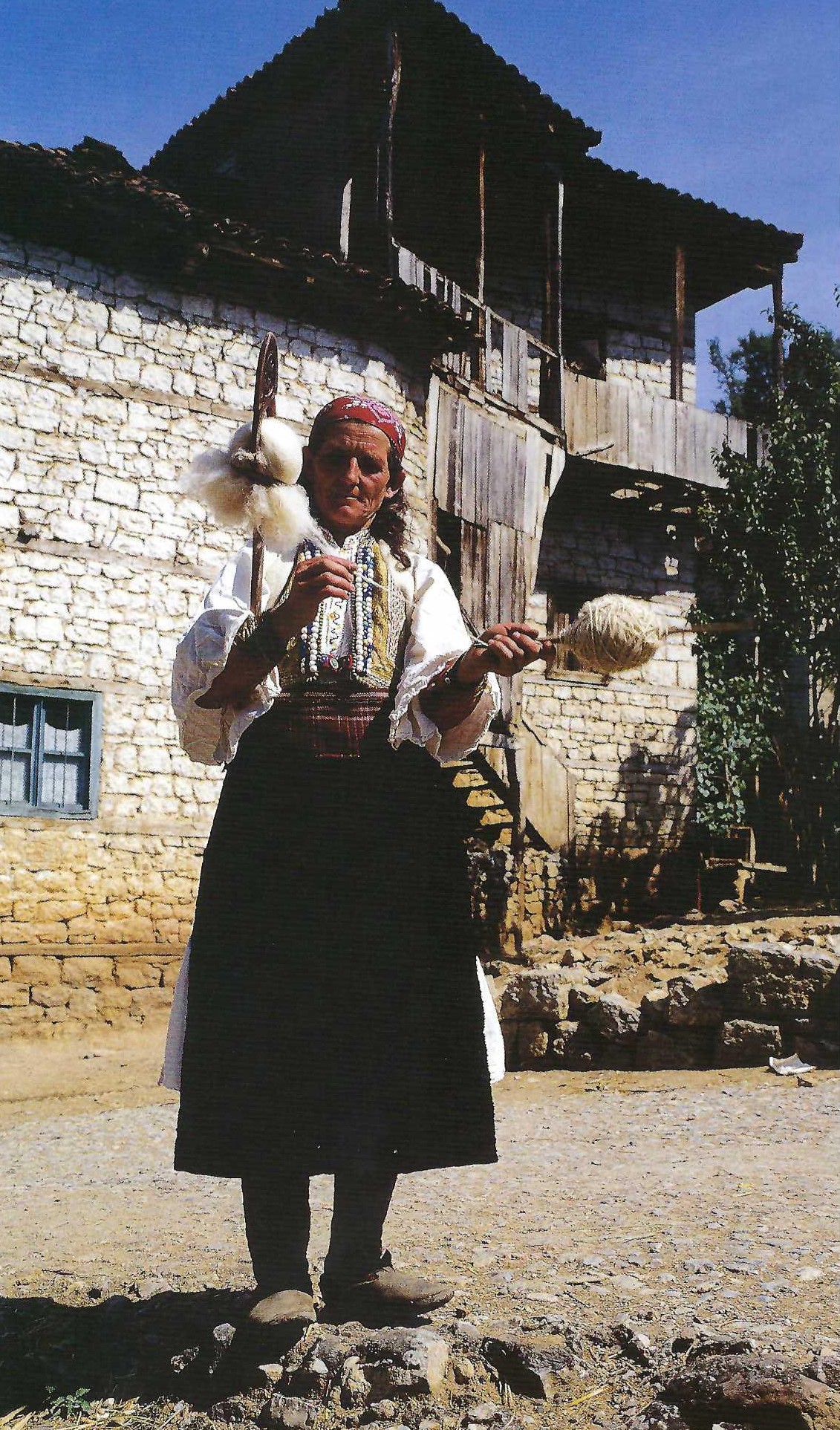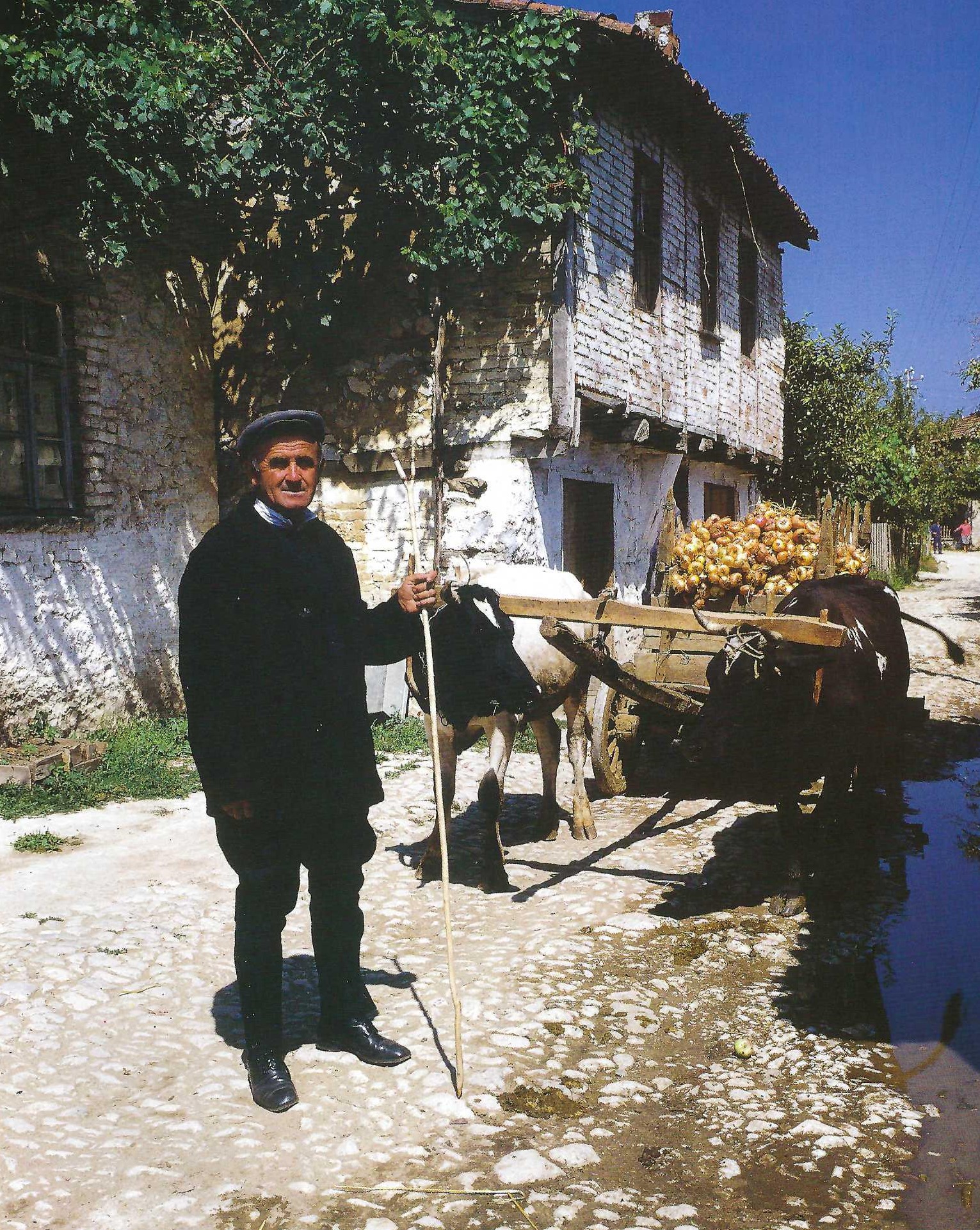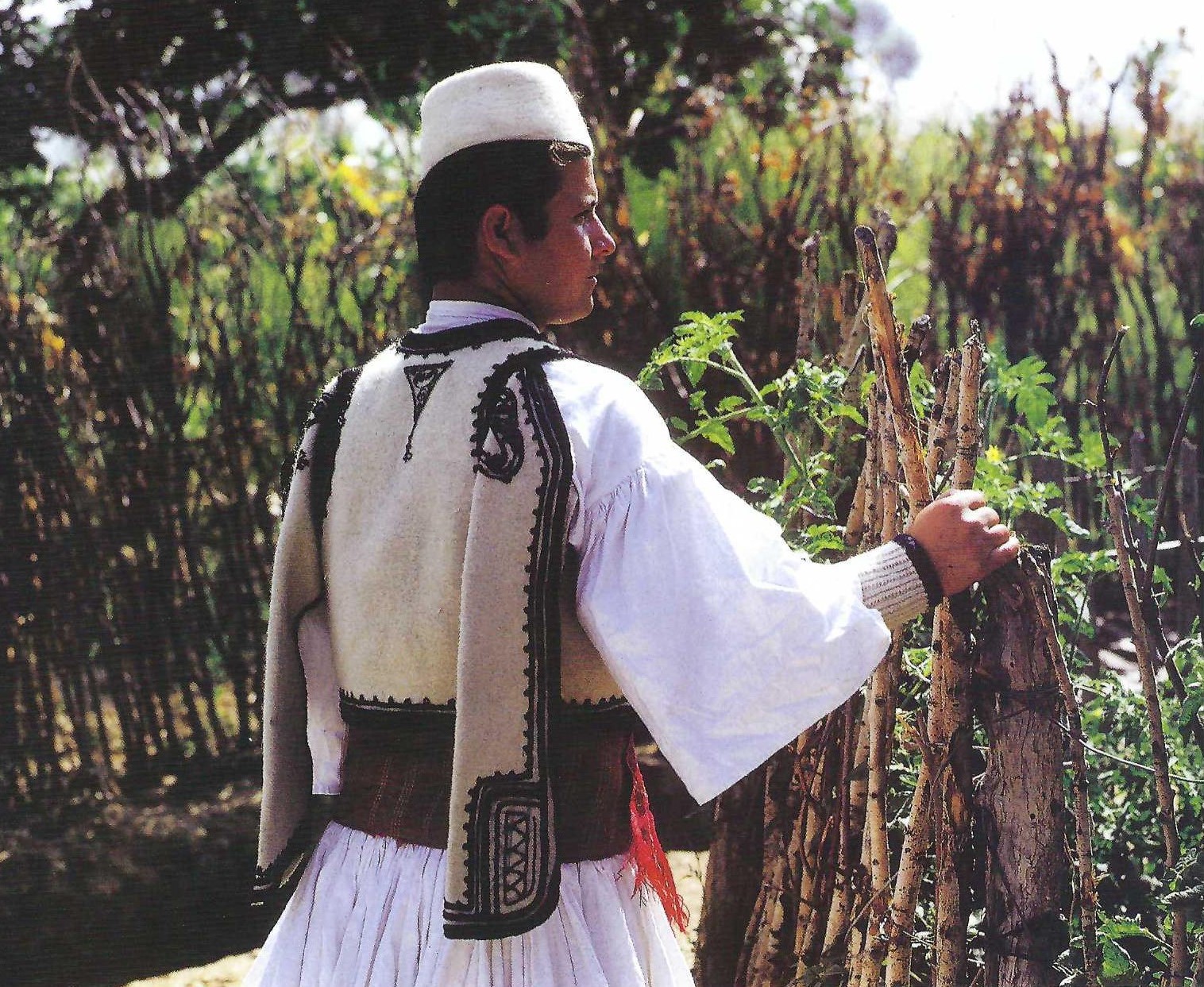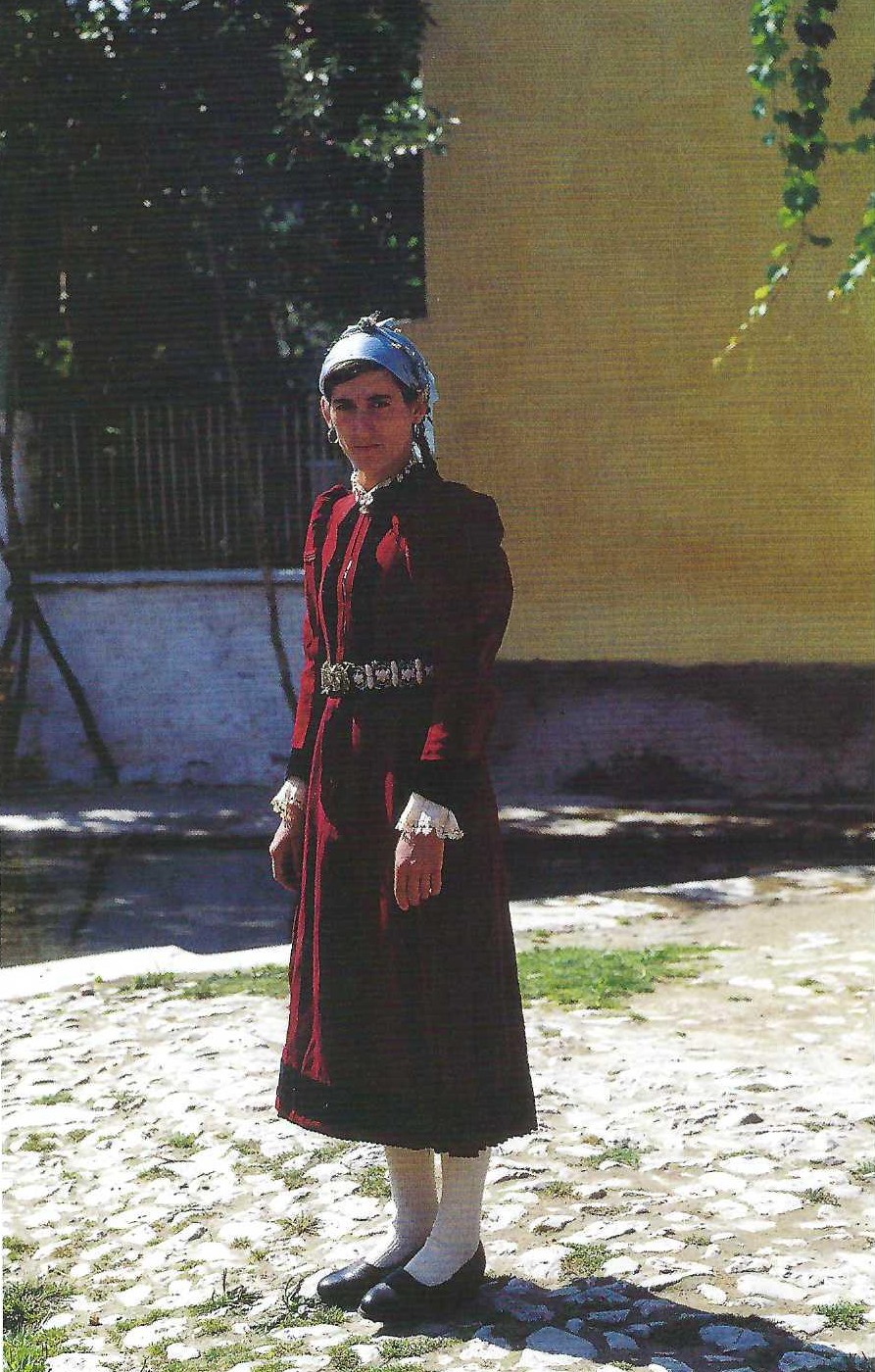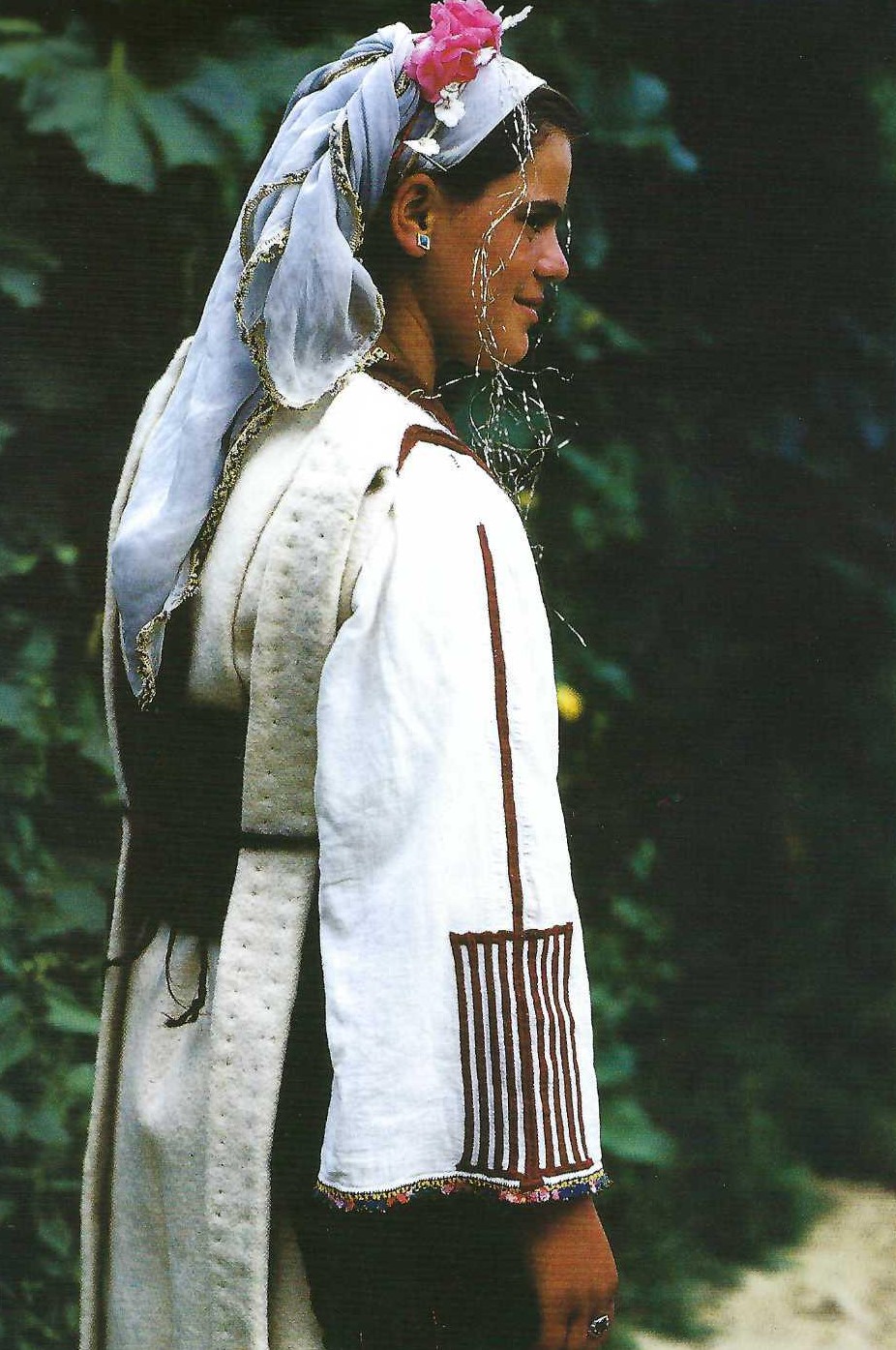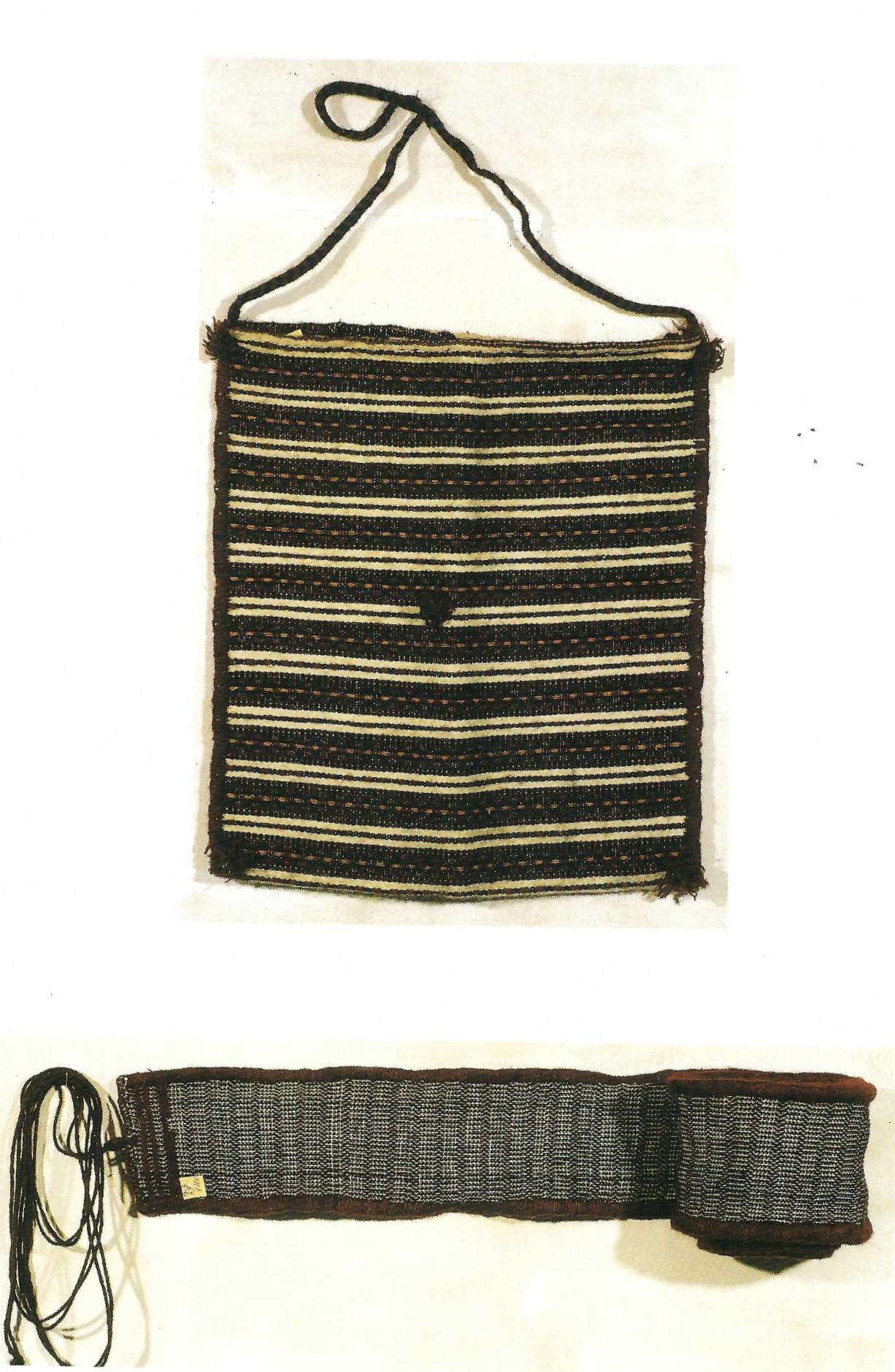

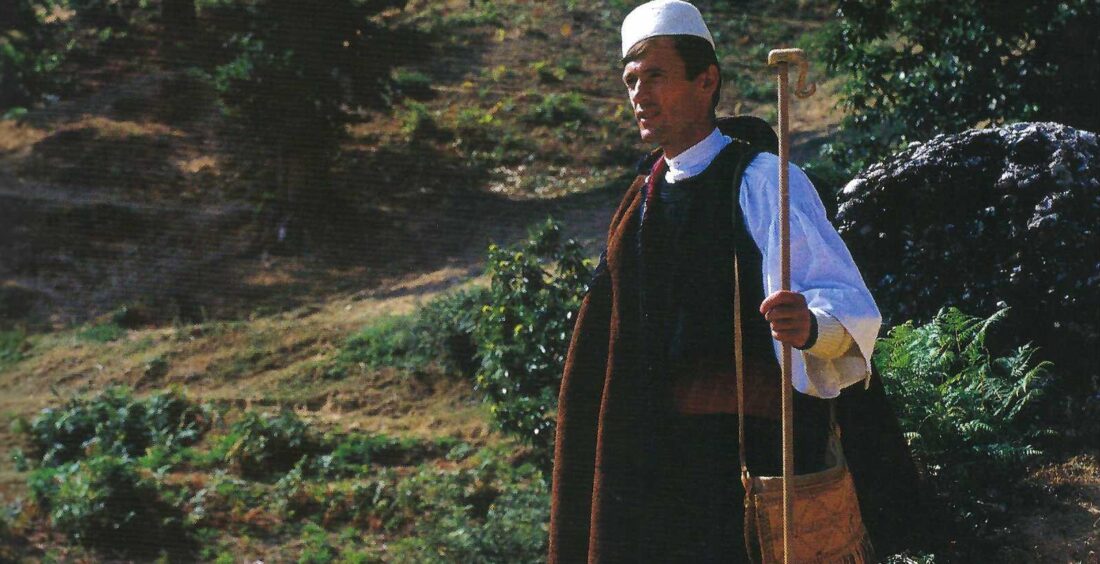
The rich cultural heritage of the Pogradec district is especially reflected in its traditional clothing, which varies according to its regions and surroundings.
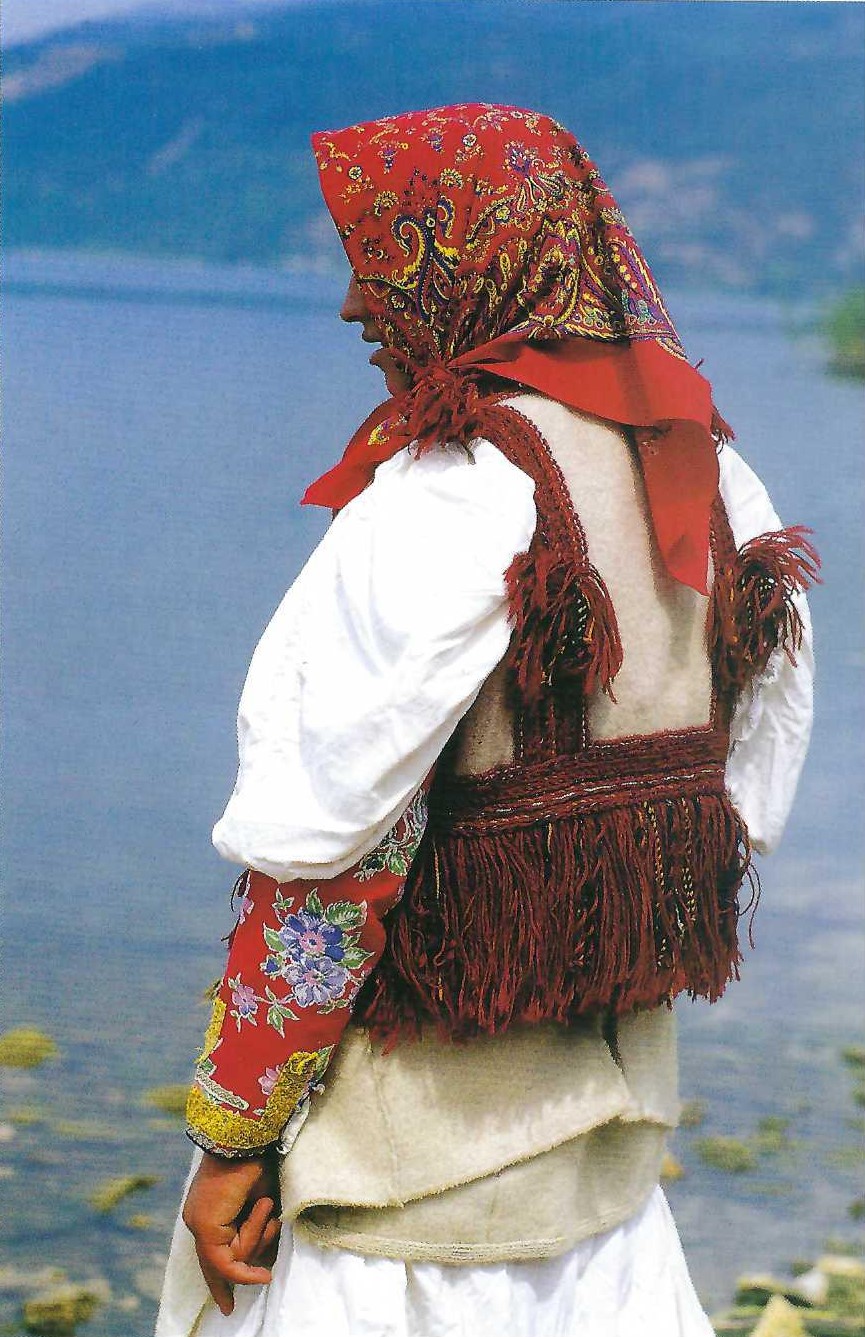
The clothing of women from Mokra was worn in two variations: that of Orthodox and Muslim women.
The basic elements of the Orthodox women’s attire included: the linja (a long shirt reaching the ankles) with long embroidered sleeves, several types of woolen cloaks (guna), the cibun worn over the shirt, a belt, woolen socks, and a white headscarf.
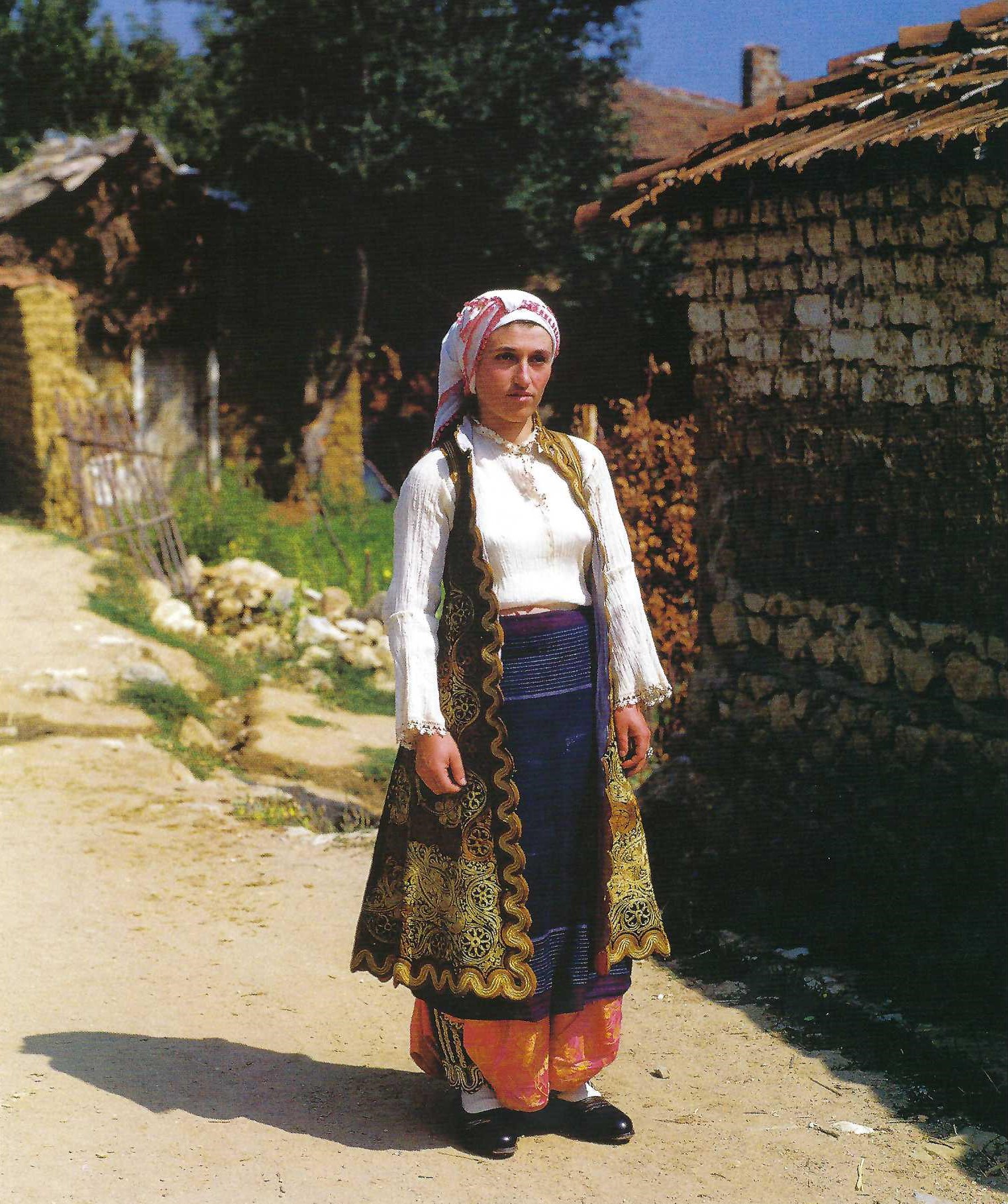
Muslim women, especially in Rodokal, Piskupat, and Lin, typically wore a white cotton shirt. Under it, they wore a floral-patterned skirt (fustanellë basmeje), and over the shirt, a cloth vest (jelek) decorated with a yellow ribbon and metal coins. An important part of the costume was the xhoka, decorated with white braids, made by the rural women themselves.
The attire of women from the foothills of Pogradec included embroidered çitjane (traditional trousers) with golden braids, a fabric shirt, and a silk scarf or haliskë tied around the head.
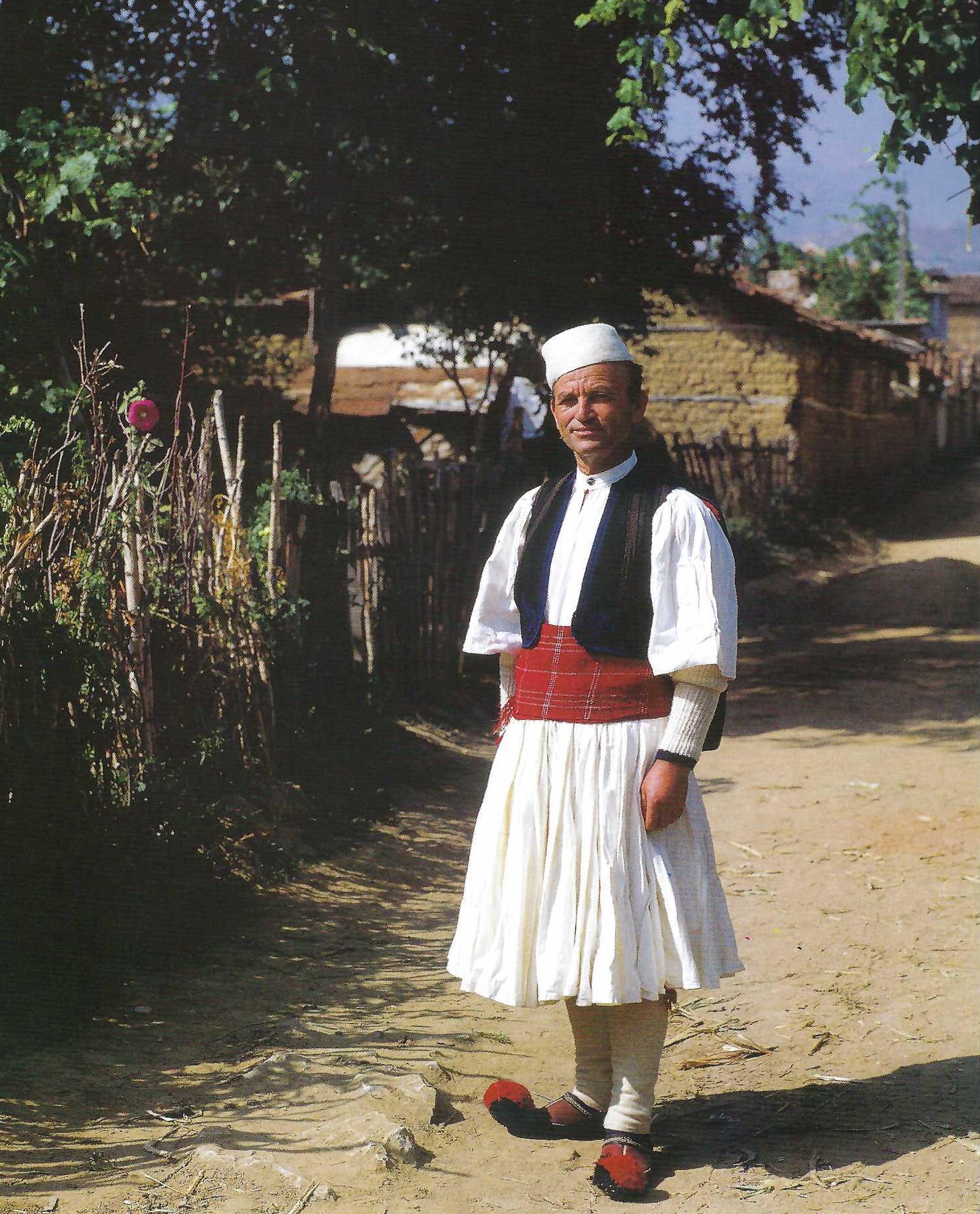
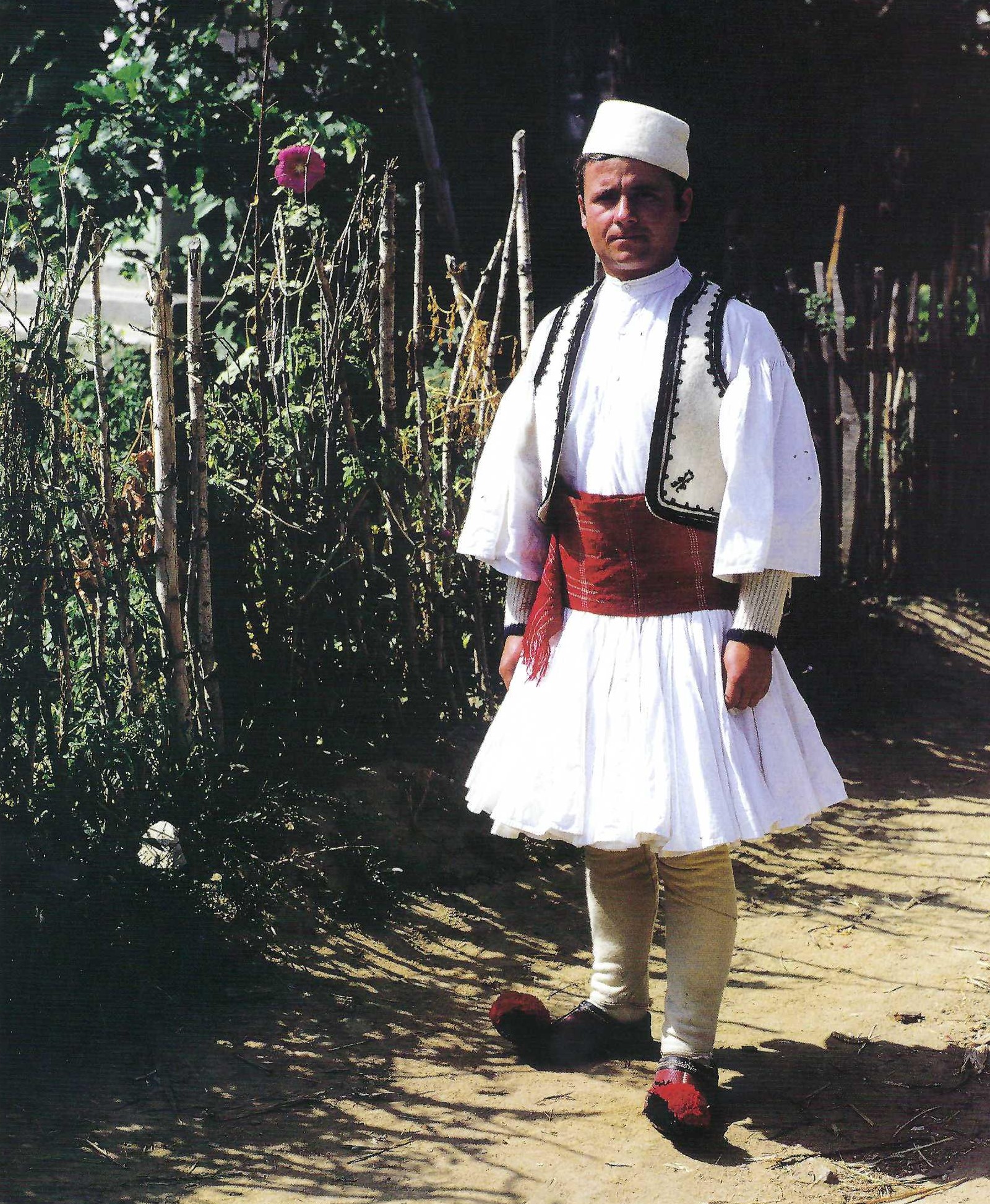
Meanwhile, the men’s clothing in the Pogradec foothills included a suit and fustanella (pleated skirt), whose width depended on the wearer’s economic status.
Their outfit also included a wool sweater and a white woolen xhamadan (vest), worn over the shirt.
Additionally, the traditional men’s clothing in Mokra until the eve of World War I consisted of the fustanella, which was later replaced by trousers with befça (folds). Men’s attire in Gora, on the other hand, was replaced by qillota (pants), accompanied on top with a sweater, shirt, and woolen vest (jelek).