Trashëgimia EN

Arkeological Museum of Durrës

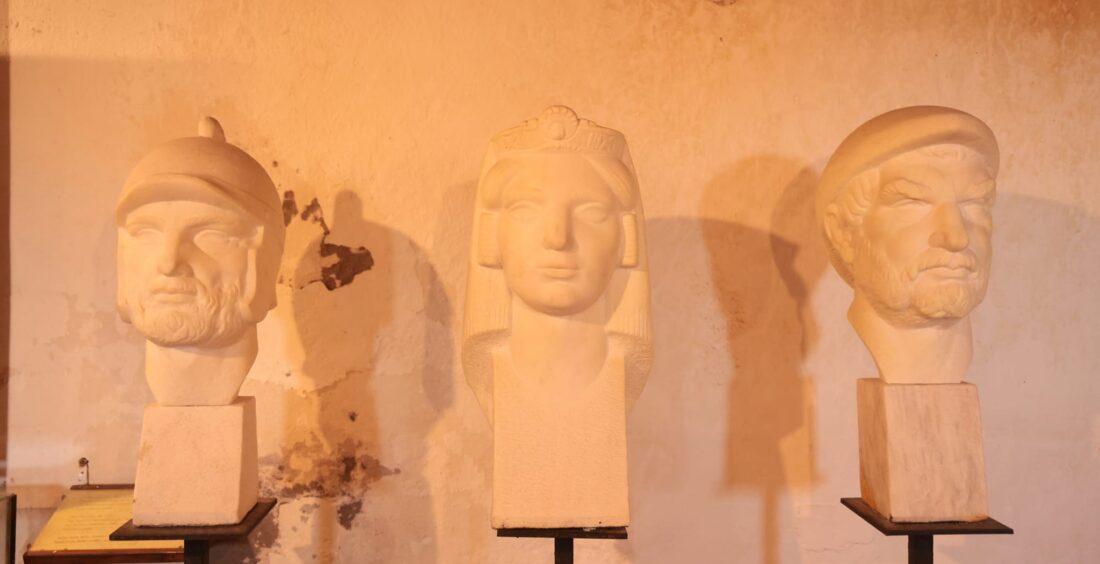
Today, Durrës has the largest archaeological museum in Albania. The old museum was opened in March 1951 by Vangjel Toçi, known as the father of Durres archaeology, exhibiting the objects discovered underground in the Durres area. The new museum building was opened in 2002 and was redesigned in 2015, where over 2,000 objects from prehistory to the 4th century AD are exhibited. As soon as you enter the museum, you will find one of the most beautiful sculptures, the statue...

National Gallery of Art

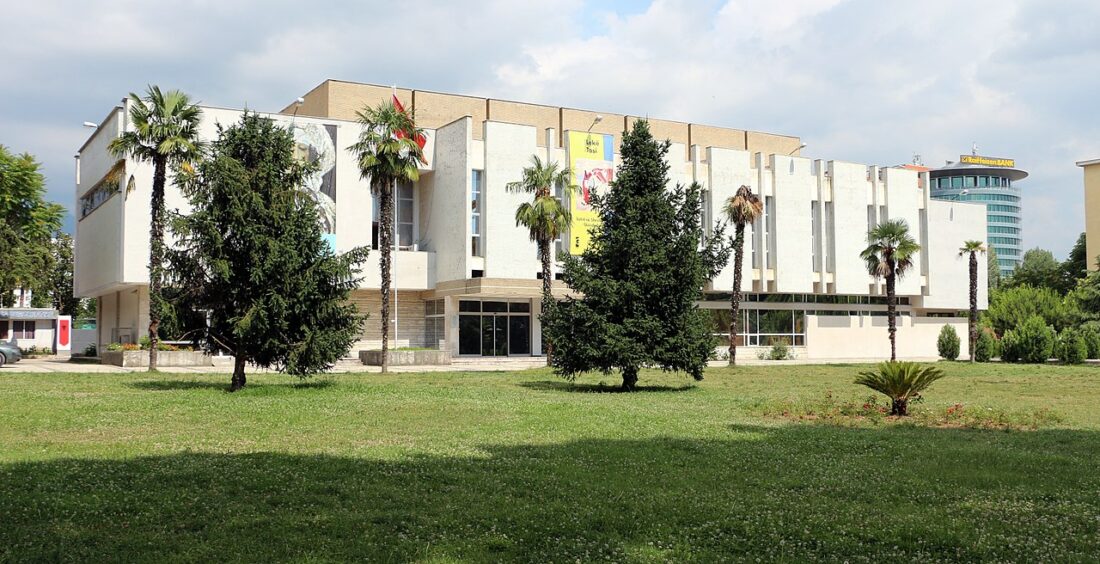
Pinakoteka was the first institution of visual arts in Albania. After a hard work and many efforts, on January 11, 1954, the National Art Gallery in Tirana was officially opened to the public. The building of the National Art Gallery, which is located today on “Dëshmorët e Kombit” Boulevard, was inaugurated on November 29, 1974. There are several exhibition halls such as the Renaissance Art, the Byzantine Art, the Graphics Hall and the one of works made after 50s. The National...

National Archeological Park of Apolonia

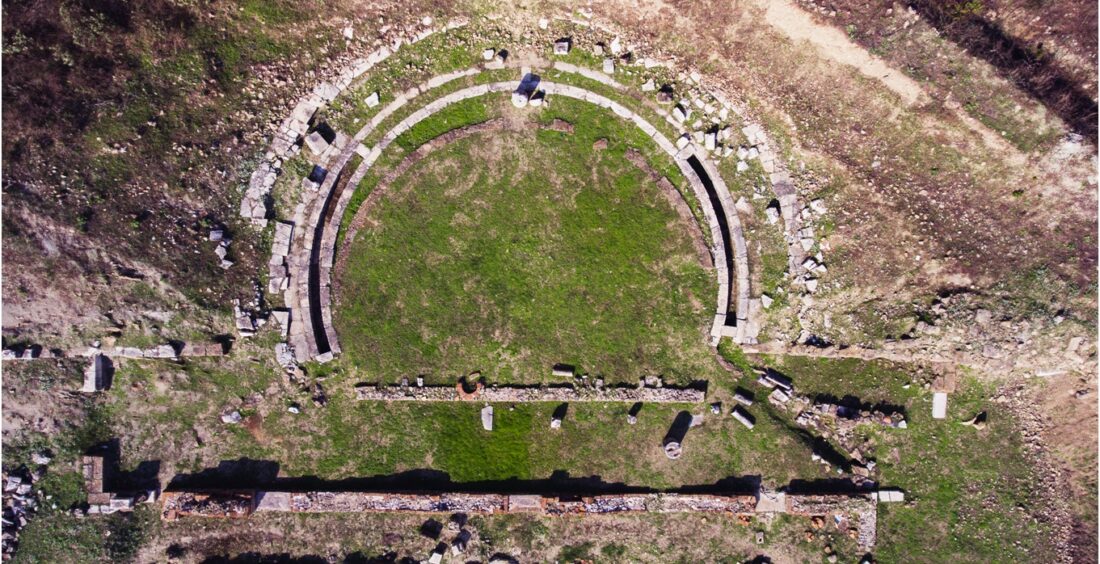
Apolonia National Archaeological Park is an ancient city in Albania, among the largest in the Adriatic basin and the most mentioned among the other 30 ancient cities. It was founded around the beginning of the 4th century BC, while the ruins of Apollonia were discovered at the beginning of the 19th century. The earliest archaeological traces are some objects of the Iron Age, typical of the Illyrian culture. From the first centuries of the city’s life, there are some ruins...

Historical Museum of Shkodra

The Shkodra Historical Museum was established in 1947 under the name “Folk’s Museum” and was officially founded in 1949 with all of its current components. The museum was located in the center of the city, in a monumental building of the 19th century, the value of which was enhanced by the “Clock Tower” next to it. The museum was assembled on the basis of the old collections of the Jesuit and Franciscan assemblies established since the end of the 19th...

The ancient city of Phoenicia

The ancient city of Phoenicia received the status of National Archaeological Park in 2005. Phoenicia has an ancient history, which was the capital of the Kaons, while in the 3rd century it became the capital of the entire state of Epirus. According to Polybius, it was the most fortified city of Epirus. It stood on a hill in the shape of an overturned ship. The Archaeological Park of Phoenicia is located on a hill 283 m above sea level, 9 km...

The Iconographic Museum “Onufri”

The Iconographic Museum “Onufri” is in the center of the inhabited neighborhood of the Berat fortress. It is adapted to the areas of the Cathedral “Sleeping Saint Mary”. The church where the “Onufri” iconographic museum is located is the largest church in the Kala neighborhood. It was the Cathedral of the City of Berat and together with the buildings of the Metropolis formed an architectural complex. From this complex, only the church has remained, which was built in 1797, but is thought...

Lake of Shkodra, the largest lake in the Balkan Peninsula

It is the largest in the Balkans, with an area of ​​360-540 km2, and together with the Moraça, Drini and Buna Rivers represents a unique system with high natural, biological and hydrological potentials. The lake is 45 km long and 13 km wide and collects water from the watershed of about 5,179 km2. The average depth is 7-10m, while the maximum is 44m. From this lake originates Buna, which flows into the Adriatic. Once, the lake stretched to the foot of the...

Karaburun

A significant part of the Karaburun peninsula represents a very large space, with significant potential for both biodiversity and economic and tourist development. The following were identified: 10 types of natural habitats (2 primary habitats), 8 important floristic species, 5 endemic species and 1 species of Annex IV of the Habitats Directive. The main groups are those of dry Mediterranean pastures, open forests with valanid (Quercus ithaburensis subsp. macrolepis) and other deciduous oaks, makies with elk (Q.ilex) and less often...

Nikolica

This attraction is located between the villages of Nikolica and Arrëza, in the southeast of the Morava mountains. The special feature of this area is that it stands out for its complicated physical-geographic construction. It consists of igneous rocks, terrigenous and very little of limestone. It is a cross-border area important for the exchange of faunal and floristic elements with Greece. There are many rare and sub-endemic plants. The forest is dominated by Beech (Fagus sylvatica), accompanied by Macedonian Fir (Abies...

Buna River

The Buna River is one of the most special natural beauties in the north-western part of Albania. It has been declared “Protected Landscape”, Category V. It is part of the EMERALD and IBA network. The surface of the protected landscape includes 40 km of the Buna River and 8 km of the Drin River. It includes the Buna river and the coastal-wetland area of ​​Velipoja. It is located in the plain of Nënshkodra, the southern part of the entire Shkodra...