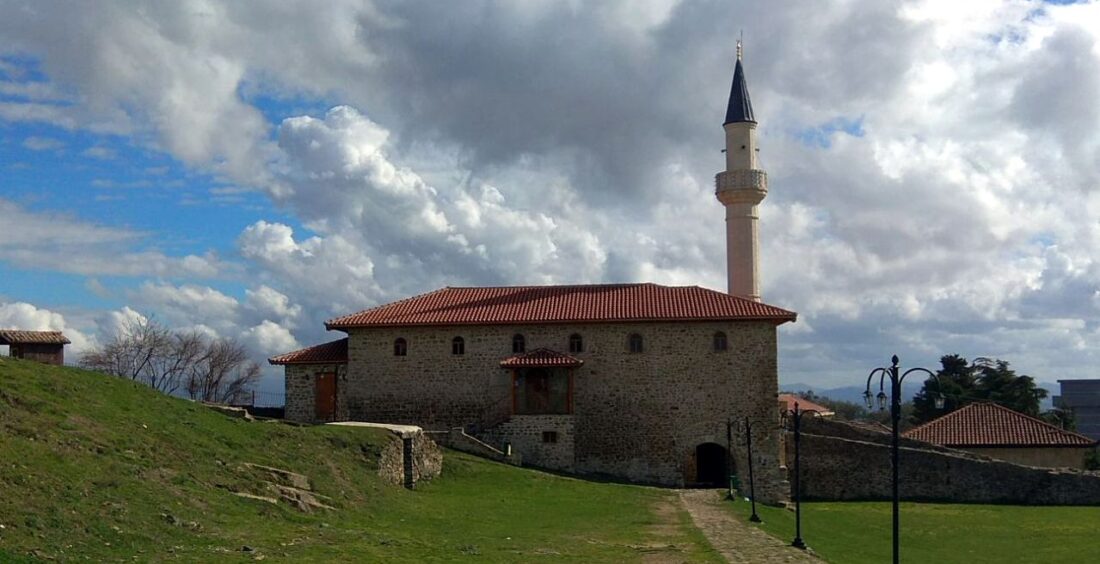
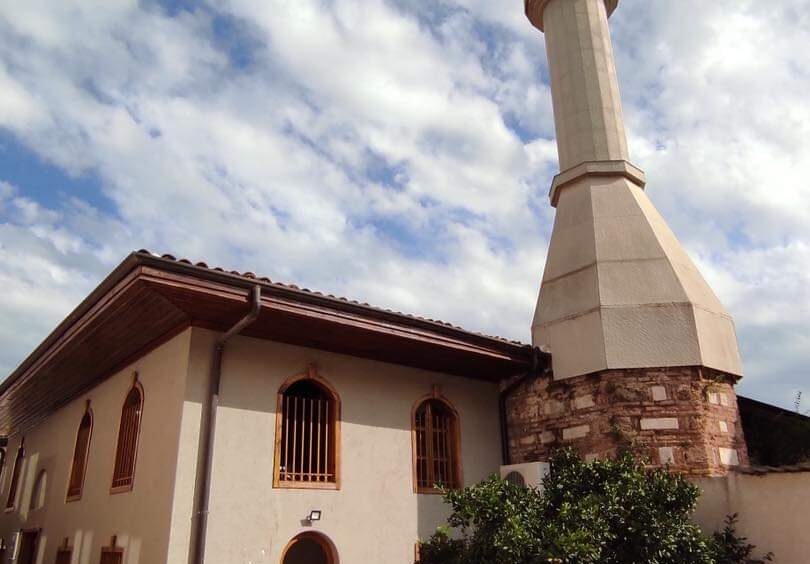
One of the most important monuments of the city of Durrës is the Fatih mosque, the oldest object of Islamic worship in this city and the third oldest mosque in Albania, after Berat and Korça. It was built in 1502-1503 on the ruins of a basilica. This mosque stands out for its colors, architecture, and interior decorations. From the ruins of the basilica on which it was built, a few brick walls have been preserved, partly the northern arcade and the western...
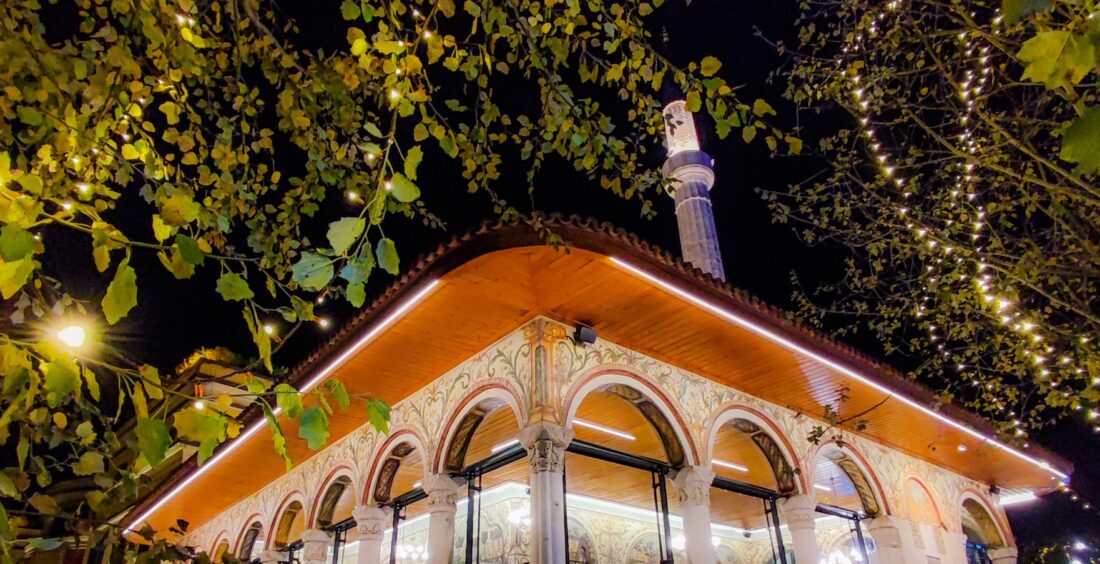
E’them Bey Mosque has been a cultural monument of the first category since 1949 and is the only one among the 18th-19th century mosques built in Tirana that has survived the devastating storm of the communist regime on cult objects. Despite the time, the mosque still retains the splendor of an attractive building. Its specialty lies in the decorations, where 700 square meters are all painted by free hand. The building has been preserved to this day in its original state, without...
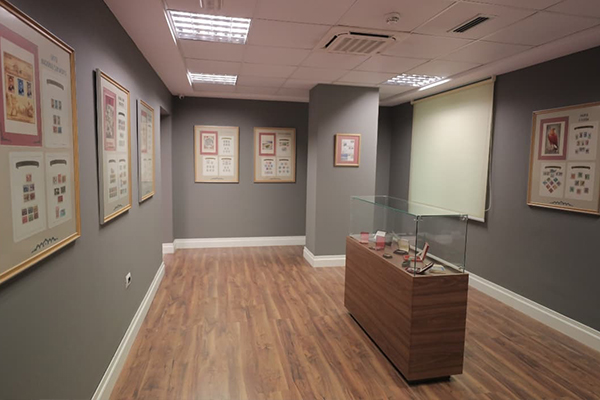
The Museum of the Albanian Stamp was established in Tirana to commemorate the 90th anniversary of the creation of the first Albanian stamp in May 1913. This stamp is kept in this museum along with parts of collections featuring 2,850 types of stamps issued in Albania from 600 different series. Here is also the first stamp printed in Albania in 1957. The post office is one of the oldest Albanian institutions, so in this museum we have on display old postal objects,...
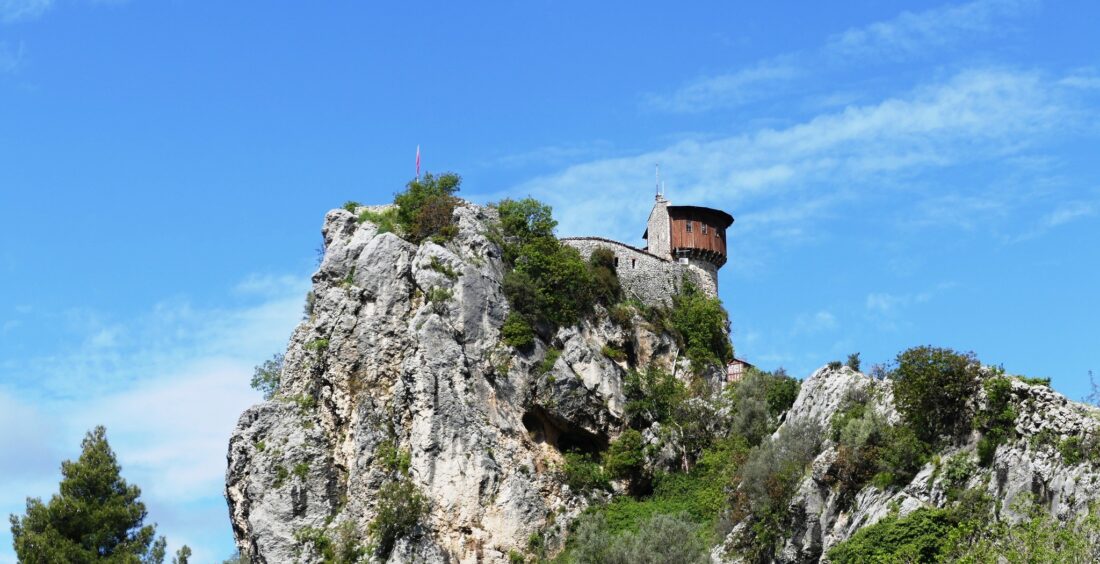
Petrelë Castle rises on a rocky hill in the southeast of the plain of Tirana, in the administrative territory of Petrelë municipality. It is a medieval fortress built in the time of Byzantium. Raised on a rather steep terrain, from where you can see all of Tirana. It was one of the forts in the most strategic position for Gjergj Kastrioti, as it controlled one of the main arteries of movement, Egnatia Street. In this period, the castle was commanded by Skenderbeu’s...
Preza Castle is located in the northeast of Tirana, just a few kilometers from “Mother Teresa” airport. It is a typical medieval castle. It had its greatest flourishing in the 15th century, but various data have led specialists to think that it must have been built from there in the 13th – 14th centuries. She belonged to the Topiaj feudal family. The castle is shaped like an irregular pentagon with round towers at four of its corners and a rectangular tower...
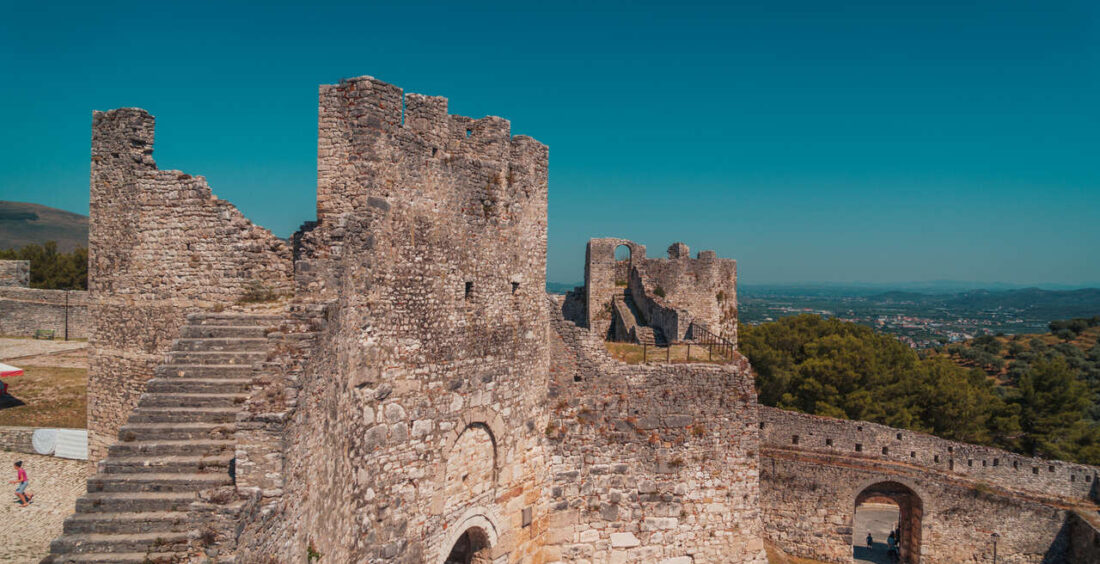
The castle, which is believed to have been built in the fourth century BC, is the crown of the ancient city of Berat. It is located at the highest point of the historical center and is one of the few monuments of the medieval period in Albania. In the century VII-V BC, as an important strategic point, it was transformed into a fortress city with walls reaching a length of up to 1400 m. Historical sources testify that since this year Berat...
The history of photography in Albania begins with the Italian photographer Pietro Marubbi, who settled in the city of Shkodra during the second half of the nineteenth century and opened the first photography studio there in 1858. The Marubi, the National Photography Museum and Albania’s first photography museum, opened in May 2016. The core of its collection is comprised of what was formerly the contents of the Marubi Photothèque. Having no children of his own, Pietro Marubbi’s first assistants and...
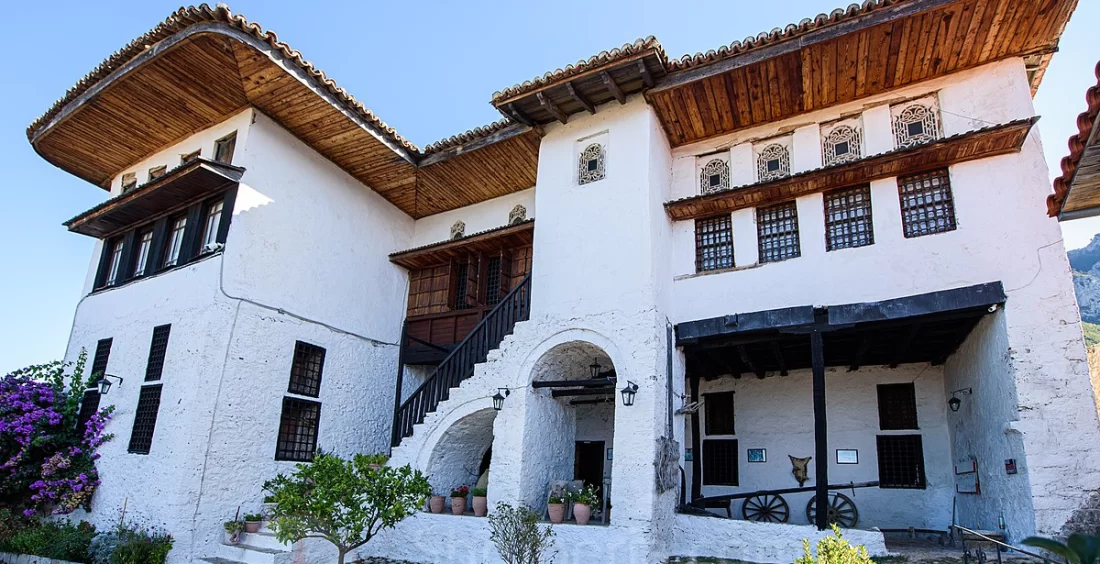
The ethnographic Museum of Kruja is located in a traditional house in the middle of the 18th century (1764), by Ismail Pashë Toptani. The architecture of the building includes a closed corridor, a tower type, and two stored high. There are frescoes of the Baroque style, which decorate most of its main rooms. In this building, there are many traditional elements of the area. The artefacts displayed in this museum have less historical and ethnographic value compared to the Museum itself,...
The National Historical Museum is the largest museum in Albania and one of the most important. The National Historical Museum was inaugurated on October 28, 1981. It is the most important museum institution in Albania. The National Historical Museum aims to promote the understanding and appreciation of the history of Albania to the local, national and international public. The building of the National Historical Museum occupies a total area of 27,000 m2. It has a dominant facade, thanks to the...
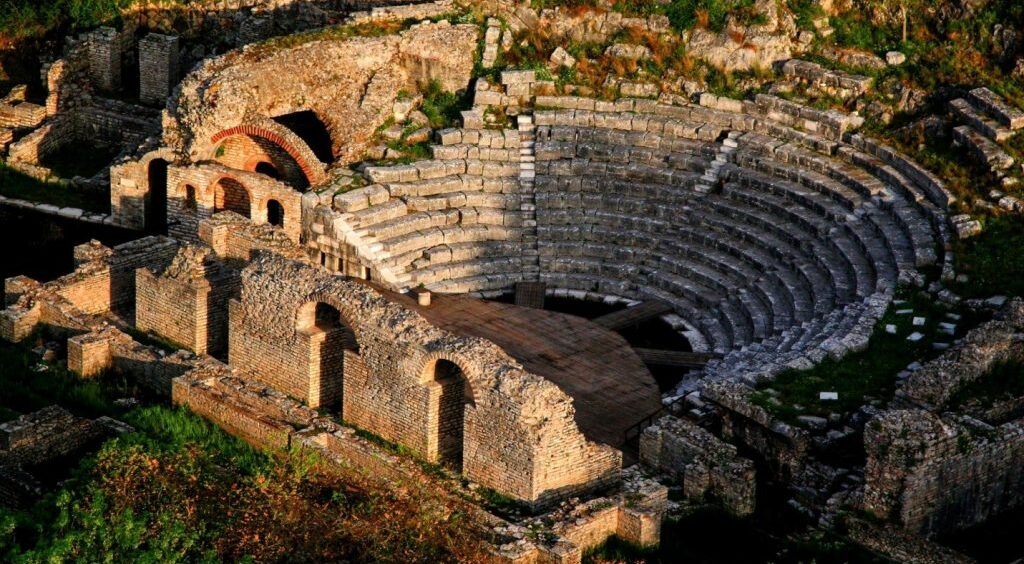
Butrint National Park is one of the most important areas of our country’s cultural, archaeological, environmental and touristic heritage. The heart of the National Park is the Ancient City of Butrint, whose existence continued without interruption, from prehistoric times to the Middle Ages, thus offering a variety of cultures and historical periods. Butrint is located on a low hill at the end of the Ksamil peninsula, which separates the Ionian Sea from Lake Butrint. This site, like many other important archaeological...