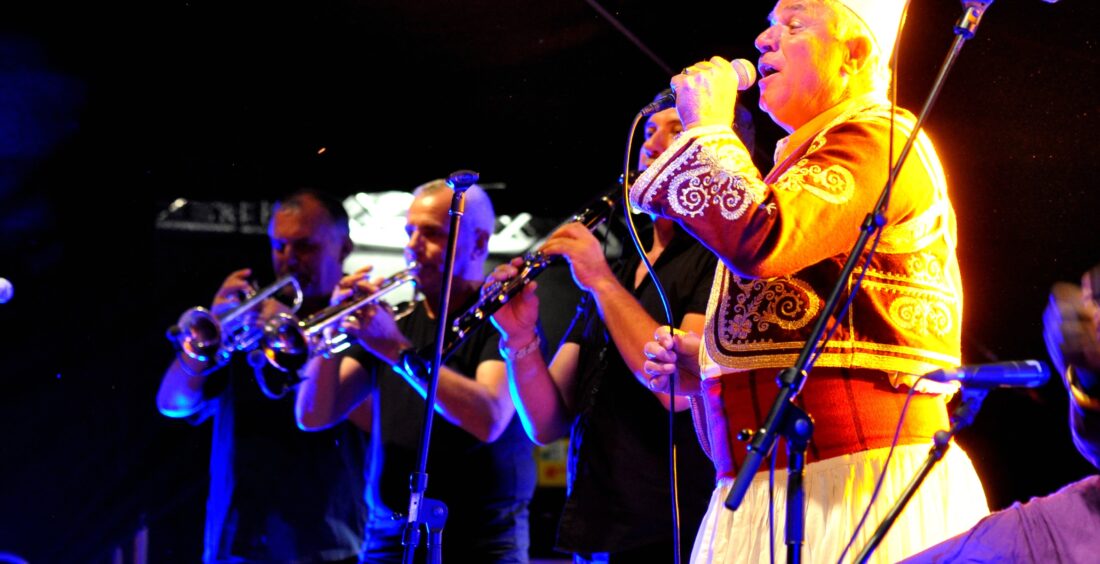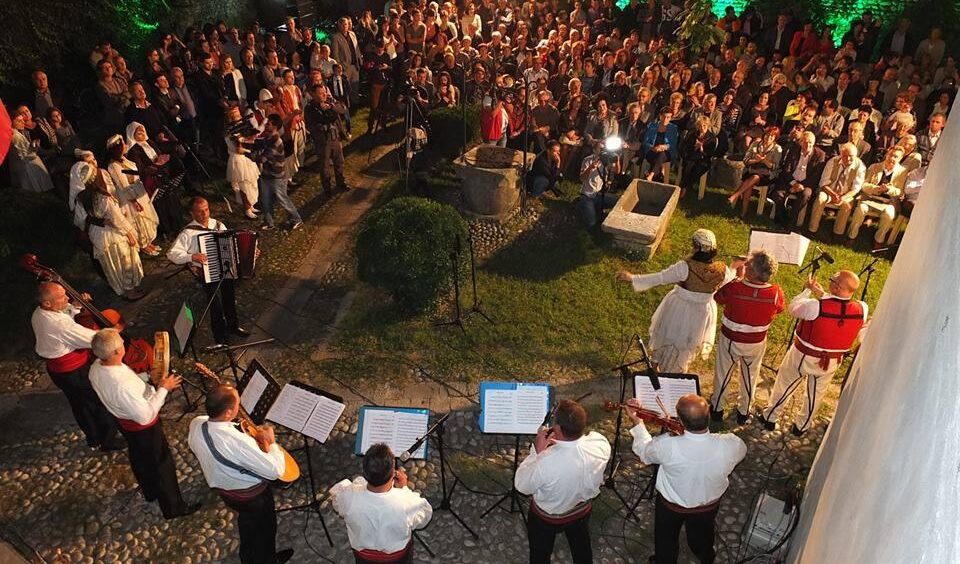
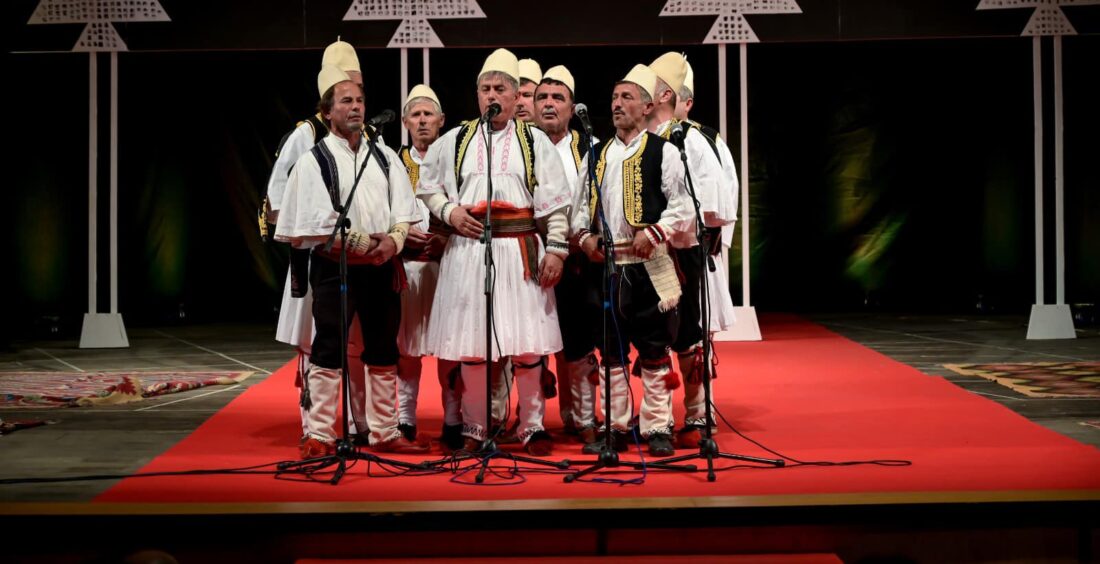
Isopolyphony is vocal, instrumental and choreographic folklore and a typology of the Albanian national spiritual heritage, declared “Masterpiece of the Oral and Spiritual Heritage of Humanity” by UNESCO on November 25, 2005. Isopolyphony is the basic musical phenomenon in South Albania, which is built on the principle of the singing of one or several different solo voices, over a bed of isoje sung by a group of singers. Its main types are Labe isopolyphony, Tuscan isopolyphony and Chama isopolyphony. Isopolyphony is...
This cycle of legendary songs, accompanied by the lute, is a typology of the Albanian national spiritual heritage, where the two brothers are at the center: Mujin and Halil. The epic is found to be sung in the Great Highlands, Rranzat, Postribë, Shllak e Dukagjin, Nikaj, Mertur, Krasniqeja e Gashi, Bytyçi, Berishë, Has as well as in Kosovo in the Dukagjin Plain with the centers: Pejë, Gjakovë, Prizren, Rahovec, Deçan , Istog and Suhareka. The time of its formation is localized to...
Folk music is traditional music, the genre that evolved from it during the folk revival of the 20th century. Some types of popular music can be called world music. But, it has been contrasted with commercial and classical styles. Traditional folk music has been defined in several ways, such as: music that is transmitted orally, music by unknown composers, or music performed to order over a long period of time. The term has its origins in the 19th century, but popular music...
Festivity of Shkodra is an important part of the folk music repertoire of the Albanian cities of Gegëria. This activity, part of our folklore, is organized in “curtains” – specific musical scales, which are twelve in total. In each curtain we find a musical repertoire, which mainly includes songs, instrumental melodies and dances, which are built on these musical scales. As an important part of the Albanian national spiritual heritage, the Shkodran party begins to crystallize from the beginning of...
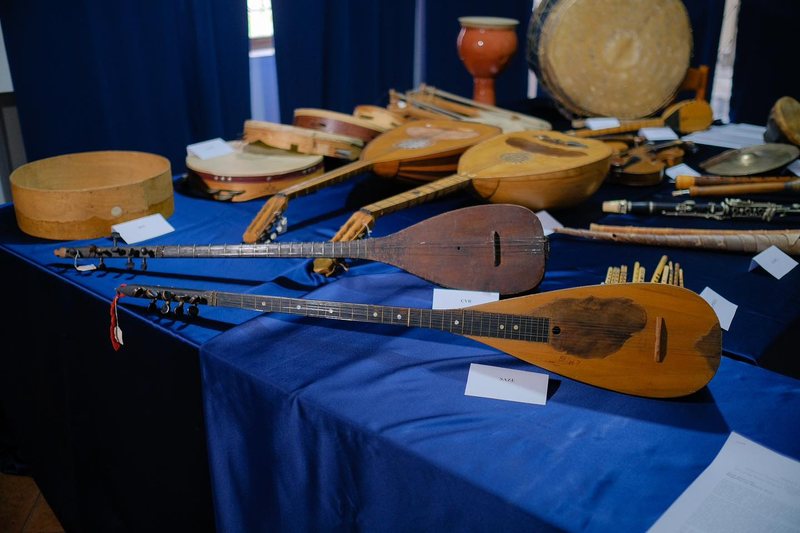
The craft of making folk musical instruments constitutes a special craft in the general picture of Albanian craftsmanship. Until the moment when the first instrument-making shops began to open (second half of the 19th century, the beginning of the 20th century), folk musical instruments were made by each family themselves, and in particular by the bearers of folklore. In the artisanal way in Albania, instruments such as bagpipes, fiddles, double flutes, zifteli, sharki, lute, tambourine, drum, lauri, buzuk, bakllama etc. have been...
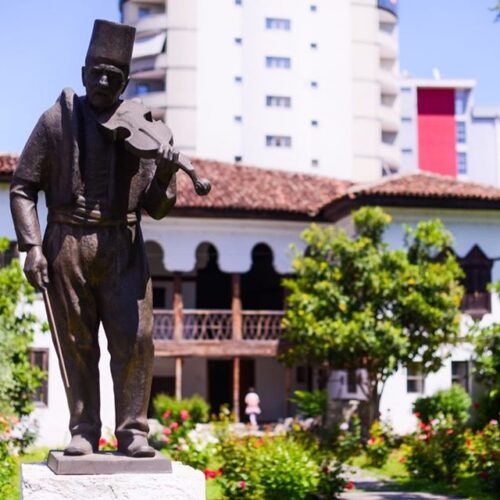
The “Stone City” is rightfully considered the pearl of our cultural heritage. It is in this city that one of the most important museums of local and customary tradition is located. The museum facility is located in the “Palorto” neighborhood and dates back to the 19th century. Built three centuries ago, the tower-type dwelling, which represents a typical model of the life of a patriarchal citizen family of the time, is still continuing to play the role of the museum in...
The museum is located in the center of Peshkopia, about 30 meters from the main boulevard. It has been located in different buildings, but currently the building in which this museum is located was the building of the House of Culture “Haki Stërmilli”, a two-story building, old in terms of the years of construction, but beautifully well maintained. In this two-story building, you can visit three pavilions with 2,000 very important relics from different time periods. You need about an...
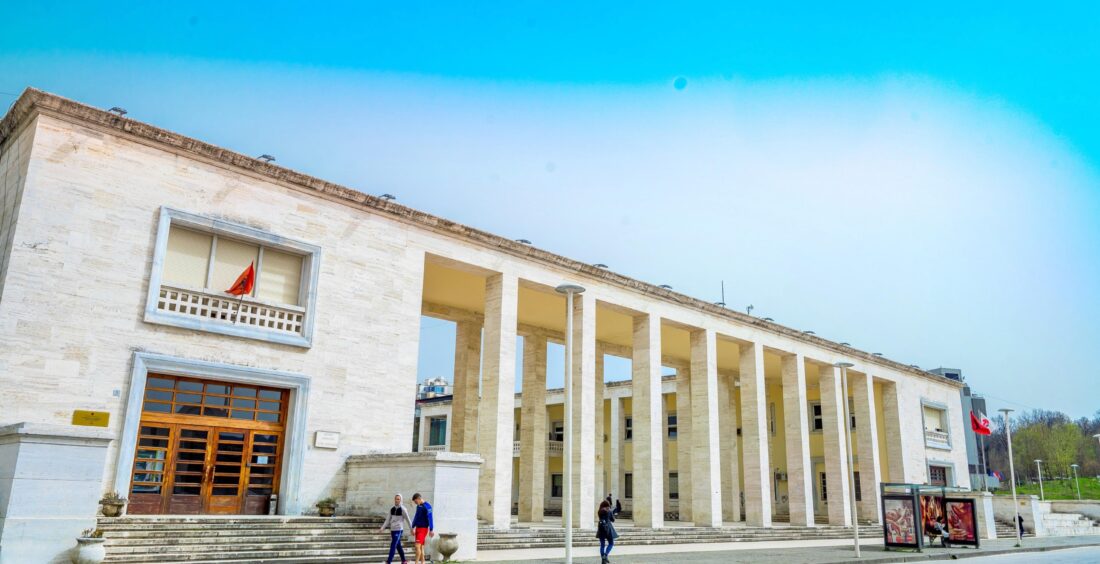
The Archaeological Museum of Tirana is the first museum created after World War II, as the last museum institutions were destroyed during this war. It was opened on 01.11.1948 as an Archaeological-Ethnographic Museum and continued as such until 1976, when the ethnographic pavilion was separated and it was organized as a profiled archaeological museum. This museum presents archaeological research and discoveries throughout the territory of Albania. The exhibited material includes a period of time from the stone ages, to those...
In the center of the city of Elbasan, very close to Rrap of Bezistan, there is a characteristic house, which in 1986 was turned into a museum. This museum, which represents the traditions and way of life in Elbasan, is located in one of the old houses of the city. The building is 200 years old and represents typical Albanian post-medieval style houses. In terms of type, culture and originality, the building is one of the rarest in the country. In compositional terms...
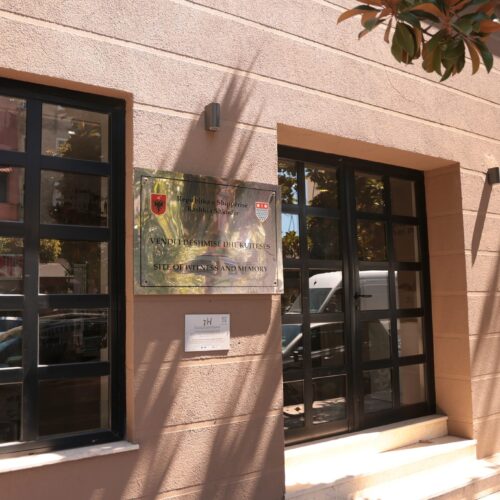
The “Place of Testimony and Memory” is the first institution that commemorates the victims who served their sentence in the prisons of the communist regime. Conceived as a museum space since September 2014, today it is a memorial of the period of the communist dictatorship, where the most culminating part are the original detention cells of the former Interior Branch. At the end of the cell space there is also a torture room where physical and moral torture was often practiced...