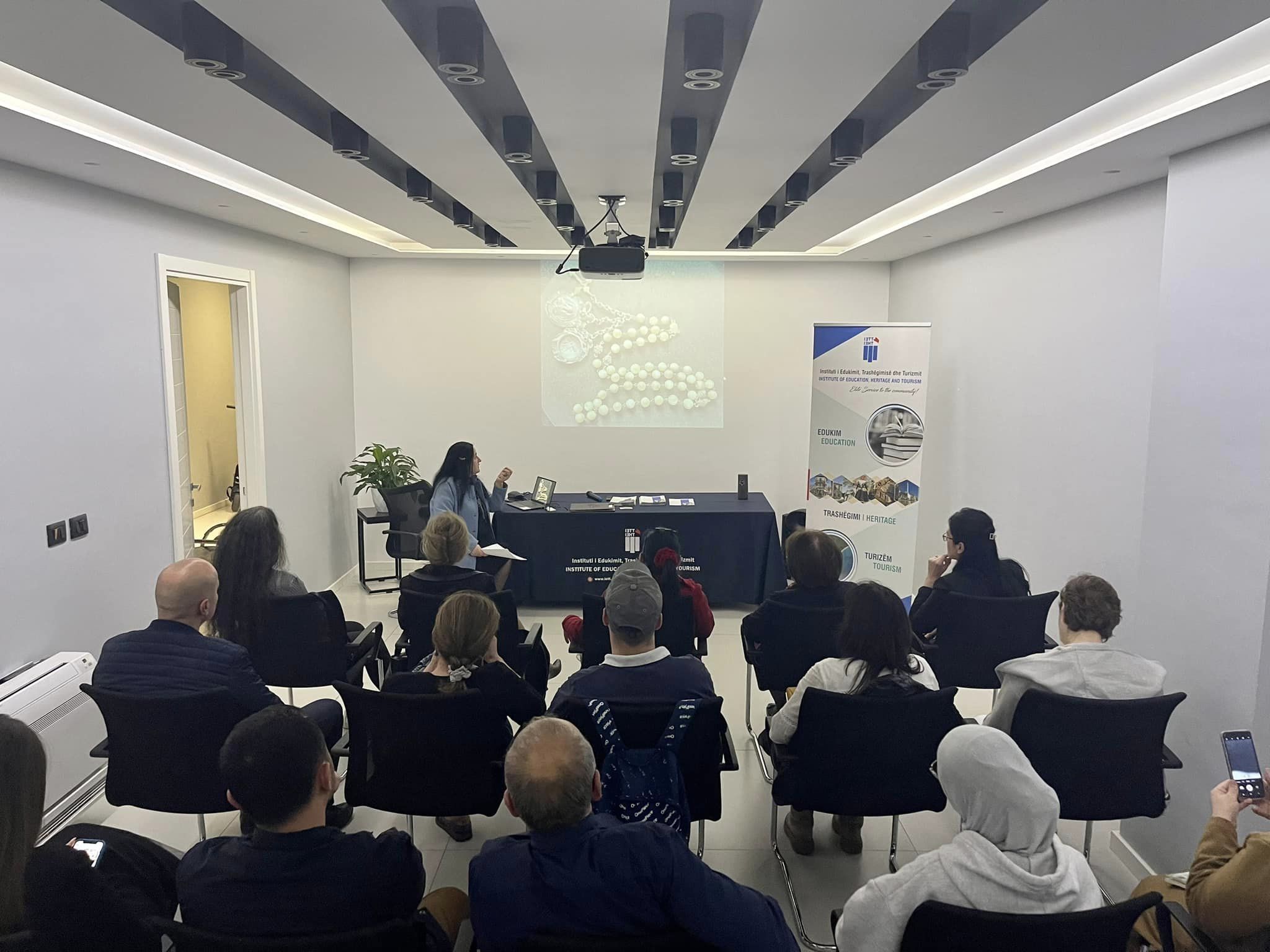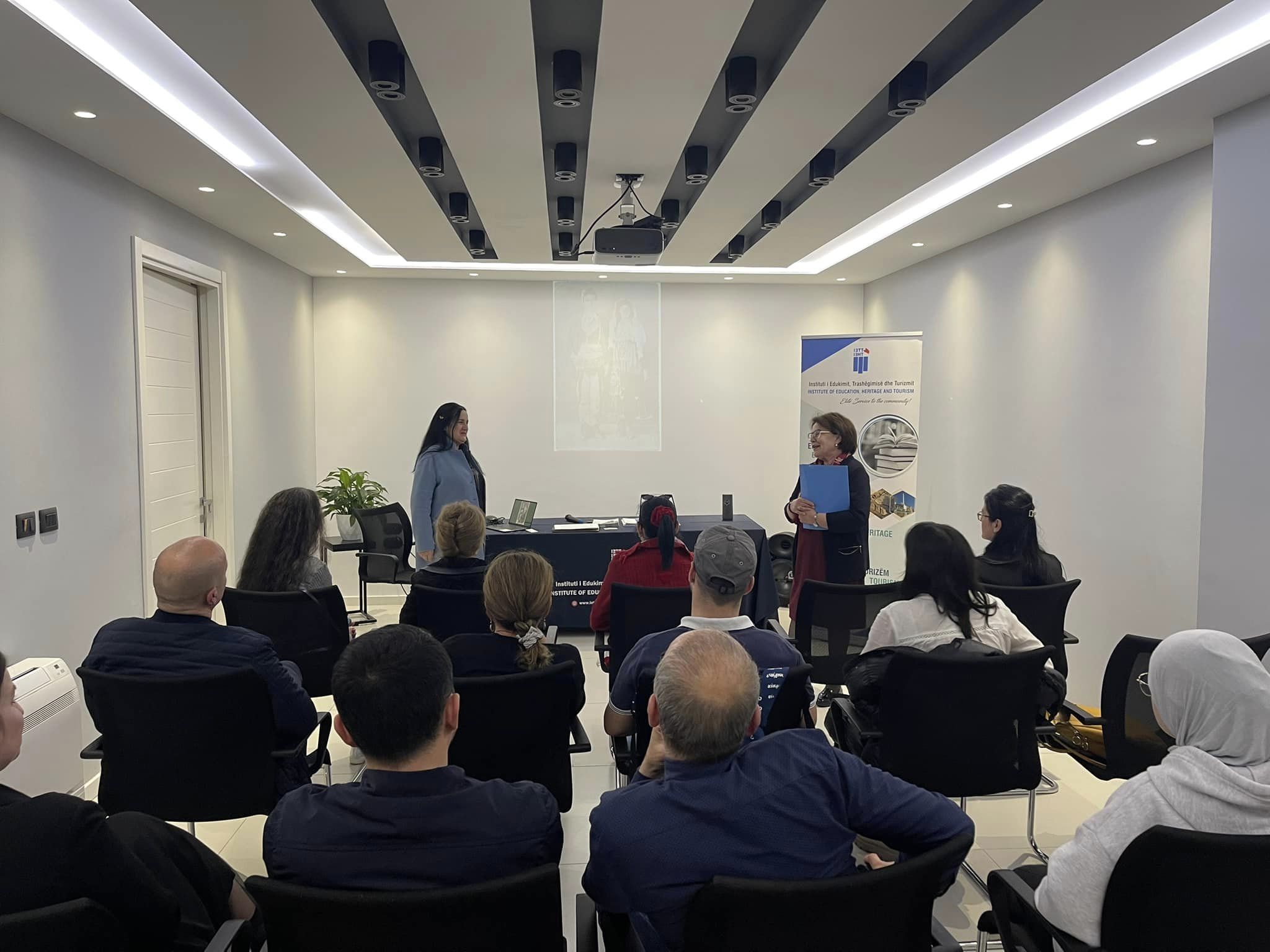

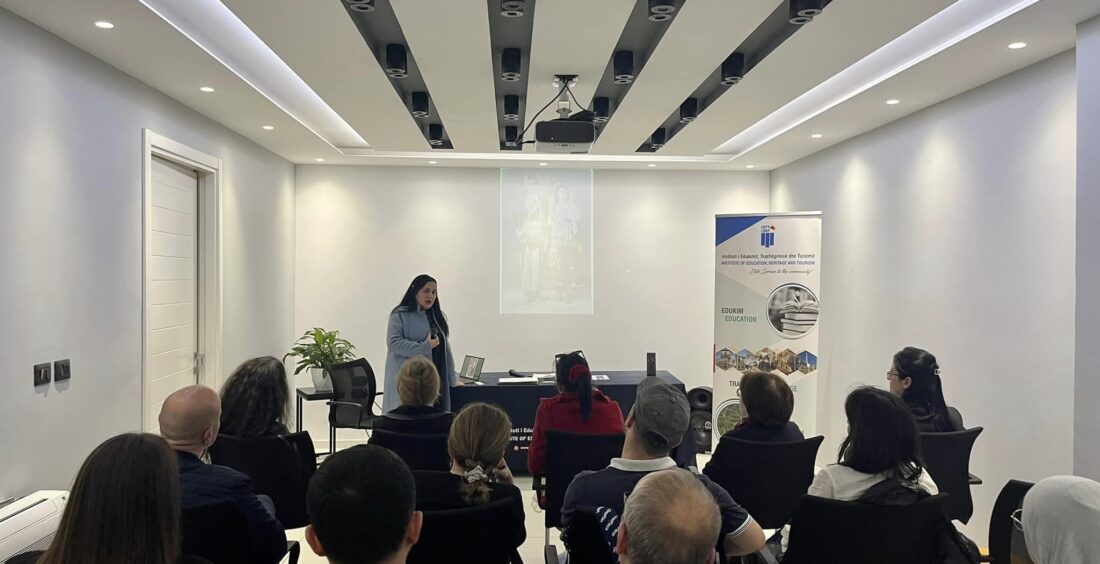
The “Xhubleta,” the oldest known type of traditional clothing in the world, stands among the most treasured cultural assets of our nation.
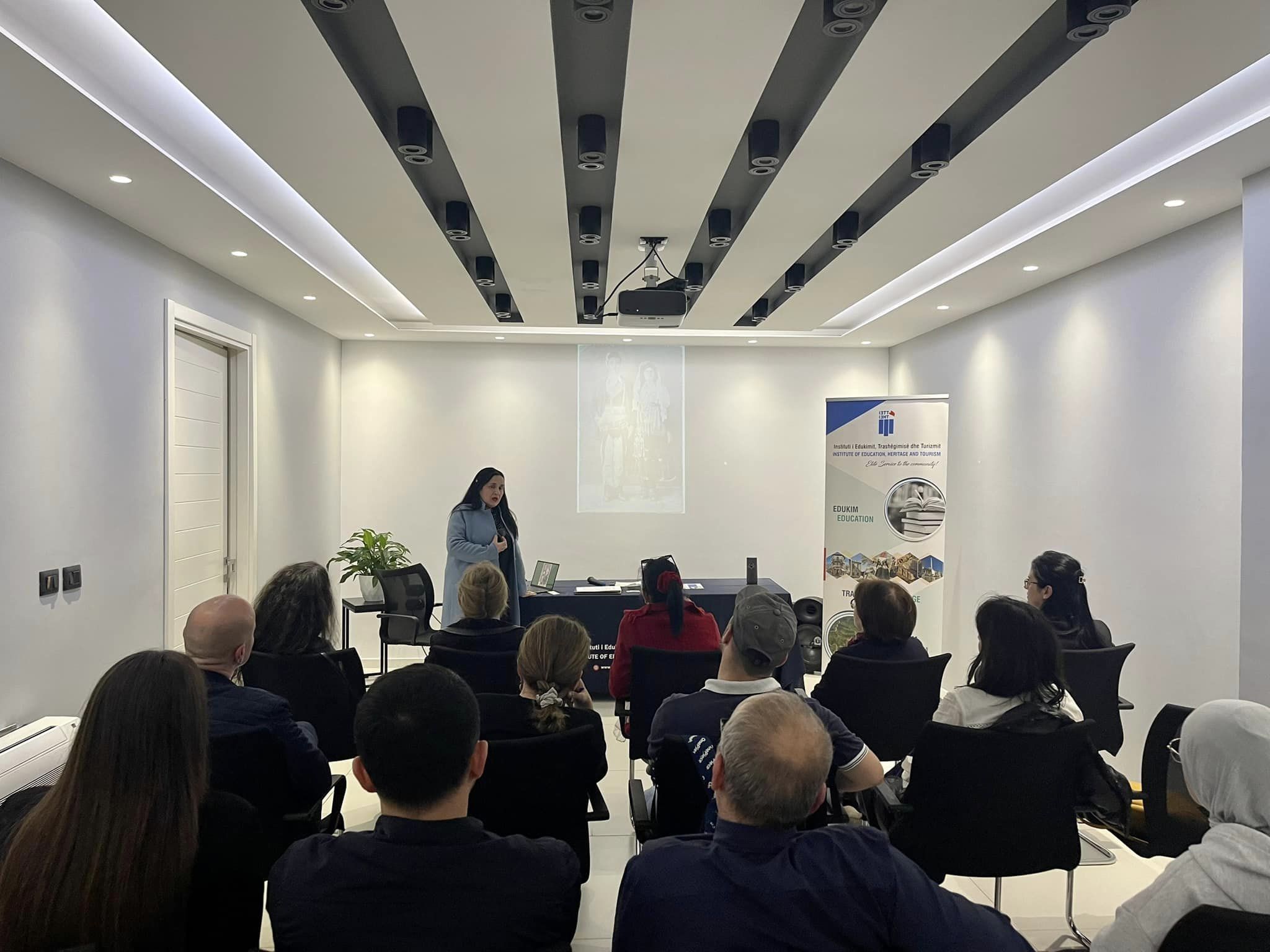
To further explore the depths of this heritage, now turned into a national symbol of “Mother Albania”—a garment far beyond the scope of typical folk dress—the Institute of Education, Heritage, and Tourism (IETT) organized a meeting with author Luljeta Dano, Director of the XHUBLETA Anthropological Center.
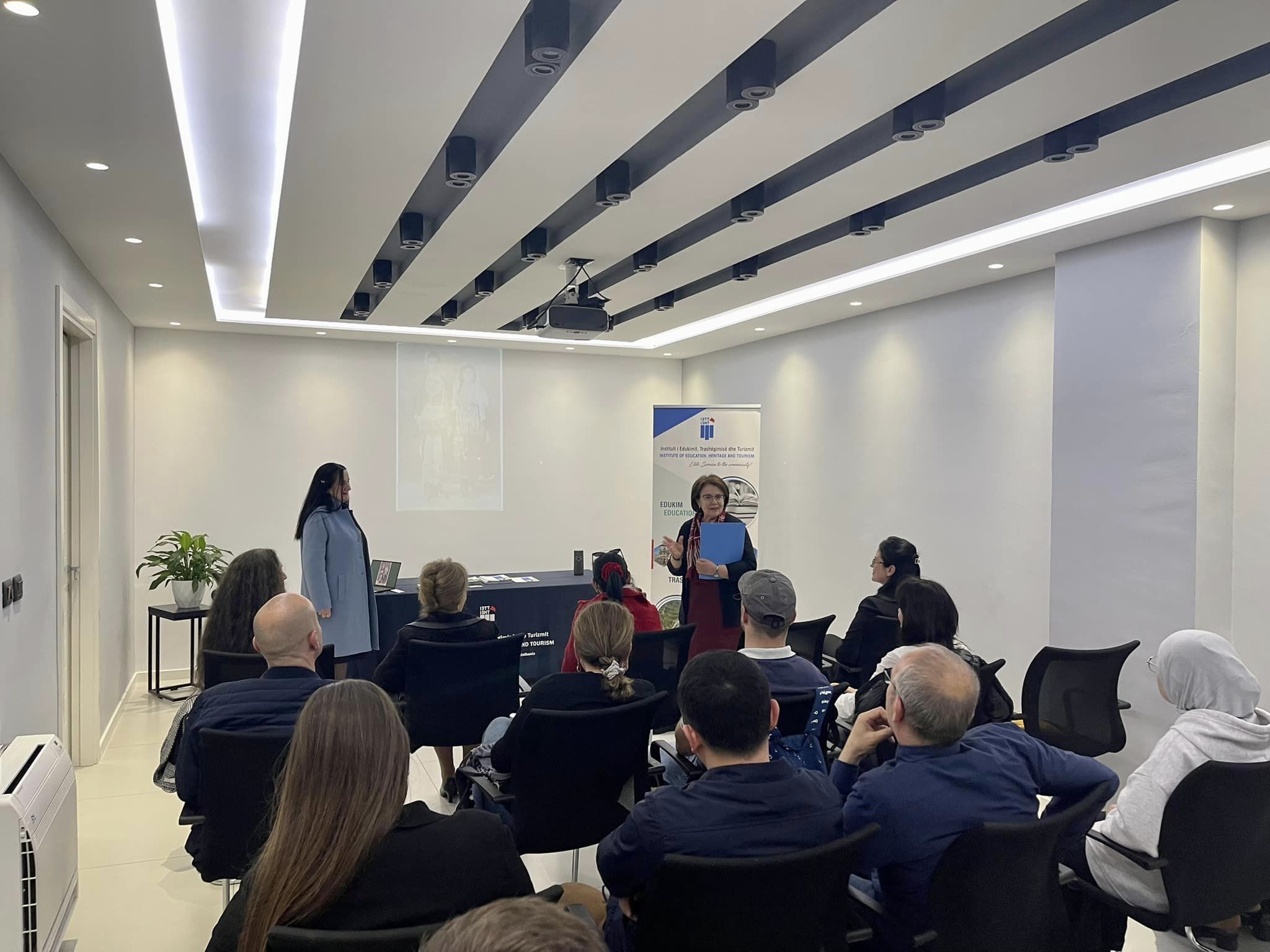
The event opened with welcoming remarks from Prof. Dr. Nevila Nika, Director of IETT, who greeted the attendees and emphasized the importance of this ancient piece of attire for our collective identity.
In her presentation, Ms. Dano shared insights into the unique characteristics of the oldest surviving traditional Albanian garment, highlighting its majestic set of ornaments with deep cultic significance, along with historical traces from the silversmithing tradition of Shkodra.
Among the key symbols featured in the decoration of the Xhubleta—discussed during the lecture—were: the symbol of Zeus’s double-headed eagle, the solar swastika, oak leaves, various pagan and Christian motifs, filigree crafted with artistic skill and floral designs, the distinctive Xhubleta buttons, and exquisite jewelry made of copper, brass, silver, and gold-plated details. These not only give the garment its distinctive aesthetic but also reflect the social status of the woman who wore it, along with many other cultural details.
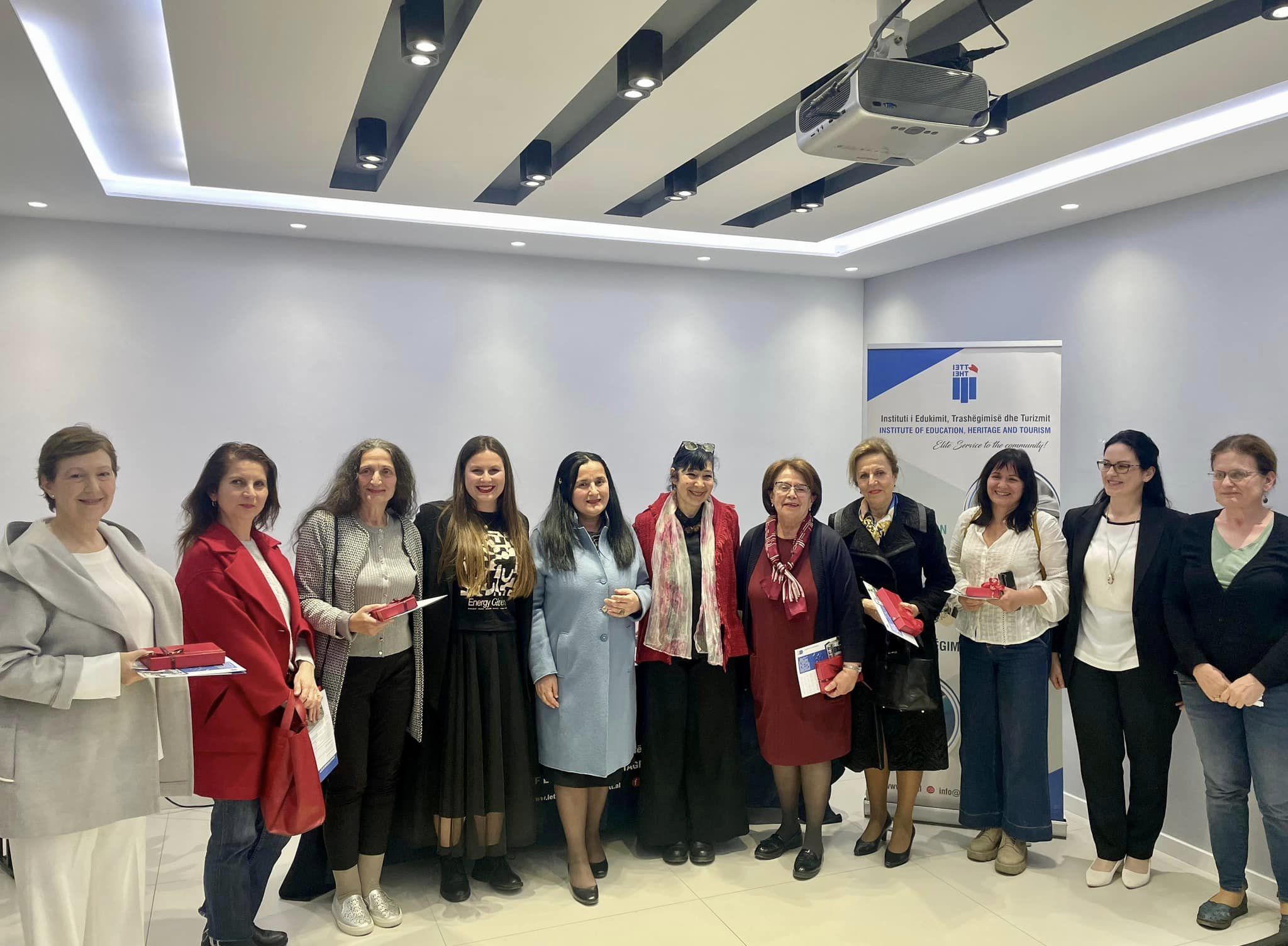
At the conclusion of the event, attendees engaged in a discussion about our national heritage. They voiced concerns regarding its current condition and shared ideas on what could be done to preserve and pass this cultural wealth on to future generations.